Skip to content
⬤ ସମାଚାର⬤ NEWS
Festival 🛕 ପଣା ସଂକ୍ରାନ୍ତି ଅପ୍ରେଲ ୧୪ ରେ — ଓଡ଼ିଆ ନୂଆବର୍ଷ ଉଦ୍ୟାପନ Pana Sankranti on April 14 — Odia New Year celebrations
Events 🏛️ ଓଡ଼ିଶା ବିଧାନ ସଭା ବଜେଟ୍ ଅଧିବେଶନ ଚାଲୁ Odisha Assembly budget session underway
Tourism 🌊 ଚିଲିକାରେ ଶୀତ ଋତୁ ପ୍ରବାସୀ ପକ୍ଷୀ ଆଗମନ ଆରମ୍ଭ Migratory birds begin arriving at Chilika Lake
Temple 🛕 ଜଗନ୍ନାଥ ମନ୍ଦିରରେ ନୂତନ ଅନ୍ନ ବଜାର ନିର୍ମାଣ New Ananda Bazaar construction at Jagannath Temple
Economy 🎯 ଓଡ଼ିଶା IT ରୂପାନ୍ତରଣ — ଭୁବନେଶ୍ୱର IT ପାର୍କ୍ ବିସ୍ତାର Odisha IT push — Bhubaneswar IT park expansion approved
Food 🍽️ ଚେନା ପୋଡା ଦିବସ ଅପ୍ରେଲ ୧୧ — ଓଡ଼ିଶାର ଆପଣଙ୍କ ମିଠା Chhena Poda Day April 11 — Odisha's own cheesecake
Festival 🛕 ପଣା ସଂକ୍ରାନ୍ତି ଅପ୍ରେଲ ୧୪ ରେ — ଓଡ଼ିଆ ନୂଆବର୍ଷ ଉଦ୍ୟାପନ Pana Sankranti on April 14 — Odia New Year celebrations
Events 🏛️ ଓଡ଼ିଶା ବିଧାନ ସଭା ବଜେଟ୍ ଅଧିବେଶନ ଚାଲୁ Odisha Assembly budget session underway
Tourism 🌊 ଚିଲିକାରେ ଶୀତ ଋତୁ ପ୍ରବାସୀ ପକ୍ଷୀ ଆଗମନ ଆରମ୍ଭ Migratory birds begin arriving at Chilika Lake
Temple 🛕 ଜଗନ୍ନାଥ ମନ୍ଦିରରେ ନୂତନ ଅନ୍ନ ବଜାର ନିର୍ମାଣ New Ananda Bazaar construction at Jagannath Temple
Economy 🎯 ଓଡ଼ିଶା IT ରୂପାନ୍ତରଣ — ଭୁବନେଶ୍ୱର IT ପାର୍କ୍ ବିସ୍ତାର Odisha IT push — Bhubaneswar IT park expansion approved
Food 🍽️ ଚେନା ପୋଡା ଦିବସ ଅପ୍ରେଲ ୧୧ — ଓଡ଼ିଶାର ଆପଣଙ୍କ ମିଠା Chhena Poda Day April 11 — Odisha's own cheesecake
🏠 ମୁଖ୍ୟ Home 🛕 ଜଗନ୍ନାଥ ସଂସ୍କୃତି Jagannath Sanskruti 🎭 ଓଡ଼ିଆ ସଂସ୍କୃତି Odia Culture 🍽️ ଓଡ଼ିଆ ଖାଦ୍ୟ Odia Food 🗺️ ଓଡ଼ିଶା ପର୍ଯ୍ୟଟନ Odisha Tourism 🛕 ମନ୍ଦିର Temples 📜 ଓଡ଼ିଶା ଇତିହାସ Odisha History 📰 ଓଡ଼ିଶା ସମାଚାର Odisha News ℹ️ ଆମ ବିଷୟରେ About 📬 ଯୋଗାଯୋଗ Contact
ଖାଦ୍ୟ / Food

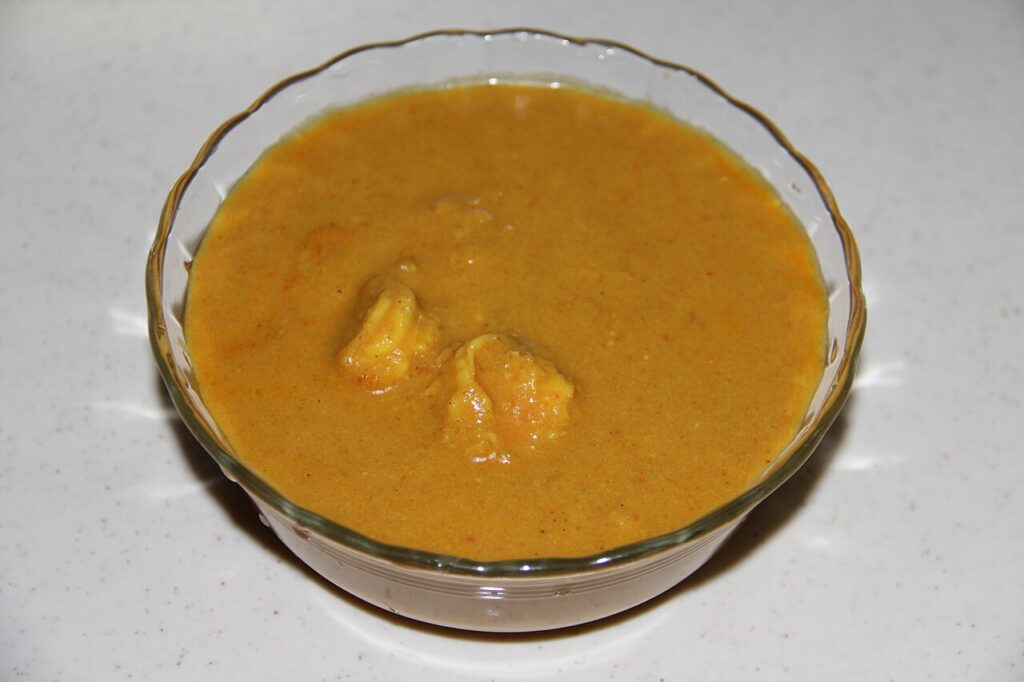
ଚିଙ୍ଗୁଡ଼ି ମାଛ ତରକାରୀ: ଓଡ଼ିଶାର ସମୁଦ୍ର ସ୍ୱାଦChingudi Machha: Odisha Prawn Curry

📅 April 12, 2026 | 📖 12 ମିନିଟ୍min read | 📝 2383.4 ଶବ୍ଦwords
📋 ବିଷୟବସ୍ତୁ
📋 Table of Contents
11 min read · 2,010 words

In English

The Classical Music System of Odisha: Foundations of Odissi Sangita

Odissi music, known as Odissi Sangita, constitutes one of the oldest and most refined classical music systems in the Indian subcontinent. Recognized officially as a distinct classical tradition by the Sangeet Natak Akademi in the mid-twentieth century, Odissi music possesses a theoretical framework, performance grammar, and aesthetic philosophy that sets it apart from both Hindustani and Carnatic systems while sharing certain ancient roots with them. The system is built upon a sophisticated structure of ragas, talas, and specific compositional forms that have evolved over more than two millennia. The foundational texts that govern this tradition include the Natya Shastra of Bharata, the Abhinaya Darpana of Nandikeshvara, and later regional treatises such as the Sangita Narayana authored by King Gajapati Narayana Deva in the seventeenth century. These texts codify the melodic frameworks, rhythmic cycles, and performance conventions that define Odissi music as a complete and self-sufficient classical system with its own internal logic and beauty.

The Odra Magadhi Tradition: Historical Roots and Evolution

The historical antecedents of Odissi music trace back to the Odra Magadhi tradition, a musical and performative practice that flourished in the ancient geographical region of Odra, corresponding roughly to modern Odisha and parts of adjacent territories. The term Odra Magadhi appears in seminal works such as the Natya Shastra, where Bharata classifies it as one of the principal regional musical styles of ancient India. This tradition was not merely a musical form but a comprehensive performance art that integrated vocal music, instrumental accompaniment, dance, and dramatic narrative. Archaeological evidence from the caves of Khandagiri and Udayagiri, dating to the reign of Emperor Kharavela in the first century BCE, depicts musicians and dancers, suggesting that a sophisticated performative tradition was already established in the region. The Odra Magadhi tradition served as the crucible from which both Odissi classical music and Odissi dance eventually emerged as distinct but deeply interconnected art forms. Over centuries, this tradition absorbed influences from various dynasties including the Bhaumakaras, Somavamsis, and the illustrious Gajapati rulers, each contributing to its refinement and elaboration while maintaining its essential Odra character.

Jayadeva and the Gita Govinda: The Cornerstone of Odissi Musical Heritage

No discussion of Odissi music can proceed without acknowledging the monumental contribution of the twelfth-century poet-saint Jayadeva and his magnum opus, the Gita Govinda. Composed at the temple town of Puri under the patronage of King Chodaganga Deva, the Gita Govinda is a lyrical masterpiece that describes the divine love of Krishna and Radha through twenty-four ashtapadis, each set to specific ragas and talas. This work fundamentally shaped the trajectory of Odissi music by providing a canonical repertoire that has been performed continuously for over eight centuries. The ashtapadis of the Gita Govinda are not mere poems set to music; they are intricate musical compositions where the raga, tala, and literary content are inseparably fused to create a specific emotional resonance. Jayadeva employed ragas and talas that were prevalent in the Odra tradition of his time, and his compositions became the standard by which subsequent Odissi musical compositions were measured. The Gita Govinda also established the practice of performing devotional poetry in a classical musical framework, a tradition that was adopted and expanded by the Vaishnava poets who followed Jayadeva, including the Panchasakha saints of the fifteenth and sixteenth centuries who composed thousands of devotional songs in Odia using the musical parameters established by Jayadeva.

Ragas Unique to Odissi Music: A Distinctive Melodic Identity

The raga system of Odissi music contains several melodic frameworks that are unique to this tradition and cannot be found in either the Hindustani or Carnatic repertoires. While Odissi music shares some raga names with other systems, the scalar structure, characteristic phrases, and aesthetic intent of these ragas often differ significantly. Among the distinctly Odissi ragas, Dhanasri stands as perhaps the most iconic, a raga associated with devotion and pathos that possesses a melodic contour entirely its own. Kalyana, in the Odissi context, differs markedly from the Yaman Kalyan of Hindustani music, employing different note patterns and emphasizing different swaras. The raga Barkhambar, used extensively in the Gita Govinda ashtapalis, has a haunting quality unique to Odissi performance. Other ragas that define the Odissi melodic landscape include Mangala Gujjari, used for auspicious invocations; Basanta, employed for springtime compositions; and ragas such as Shree, Bhairavi, and Kamodi, which, while sharing names with ragas in other traditions, follow Odissi-specific grammar. The Odissi raga system also includes compound ragas and regional variations that reflect the particular aesthetic sensibilities of the Odisha region, creating a melodic vocabulary that is both vast and distinctly identifiable.

Talas of Odissi Music: Rhythmic Complexity and Structure

The tala system of Odissi music is equally distinctive and possesses a complexity that rivals any other classical tradition in India. The foundational tala of Odissi music is the Chautala, a cycle of fourteen matras that serves as the default rhythmic framework for many classical compositions. The Jhampa tala, a cycle of ten matras divided into specific patterns, is another essential tala used across various compositional forms. The Ektali, as its name suggests, is a simple cycle but is employed with great sophistication in certain contexts. The Rupaka tala, consisting of seven matras, provides a flowing rhythmic base for lighter compositions. What distinguishes the Odissi tala system is not merely the number of matras in each cycle but the specific internal divisions, the placement of strong and weak beats, the use of kriyas or specific drum strokes to mark structural points within the cycle, and the elaborate system of tala variations that performers employ during improvisation. The talas are not abstract time-keepers but living rhythmic entities that interact with the melodic content to create the overall aesthetic experience. The mathematical precision of Odissi talas is complemented by a deep understanding of laya or tempo, and master performers navigate complex tala structures with an effortless grace that belies the rigorous training underlying such facility.

The Mardala: The Heartbeat of Odissi Rhythm

The mardala is the primary percussion instrument of Odissi music and dance, occupying a position of centrality analogous to that of the mridangam in Carnatic music. Unlike the tabla, which is commonly used in Hindustani music, the mardala is a single drum with two faces of different sizes, the larger producing bass tones and the smaller producing sharper, more resonant strokes. The body of the mardala is traditionally made from clay, though wood and other materials are sometimes used in contemporary instruments. The playing technique involves an elaborate vocabulary of strokes produced by different parts of the fingers and palms, creating a rich palette of sonic possibilities. The mardala player does not merely keep time but engages in a dynamic musical conversation with the vocalist and other instrumentalists, providing rhythmic elaborations, improvised passages, and structured compositions that are integral to the performance. The tradition of mardala playing has been preserved through dedicated lineages of percussionists who have developed and refined the instrument’s technique over centuries, creating a body of rhythmic knowledge that is specific to the Odissi tradition and essential to its authentic performance.

The Bamboo Flute and Other Instruments of the Odissi Ensemble

The bamboo flute, known as the bansi or venu, holds a position of great importance in the Odissi musical ensemble. The Odissi flute tradition is distinguished by specific playing techniques, ornamentation patterns, and a preference for certain registers and breath control methods that produce the characteristic timbre associated with Odissi music. The flute often carries the melodic line in instrumental performances and provides crucial support in vocal presentations, echoing and elaborating upon the phrases sung by the vocalist. Beyond the mardala and flute, the traditional Odissi ensemble includes the veena, a stringed instrument that historically served as the primary melodic accompaniment before the harmonium and violin were adopted in more recent times. The gini, a small pair of cymbals, provides the tonic reference and a steady rhythmic pulse that anchors the ensemble. The sitar, violin, and harmonium have been incorporated into the Odissi ensemble over the past century, but their use is adapted to the specific requirements of Odissi music rather than simply importing playing techniques from other traditions. This careful integration of newer instruments while preserving the primacy of traditional ones reflects the adaptive yet conservative spirit of the Odissi music tradition.

Modern Revival: Rescuing a Classical Tradition from Obscurity

The modern revival of Odissi music represents one of the most significant cultural recovery efforts in post-independence India. For several centuries preceding the mid-twentieth century, Odissi music had retreated into the temples and mathas of Odisha, maintained by a diminishing community of traditional musicians but largely disconnected from wider public consciousness. The same revival movement that brought Odissi dance to national and international attention also catalyzed the reexamination and rehabilitation of Odissi music. Scholars such as Pandit Nilamadhab Panigrahi, Pandit Markandeya Mahapatra, and Pandit Kalicharan Patnaik undertook rigorous research into the theoretical foundations of Odissi music, publishing treatises and presenting papers that established its credentials as a distinct classical system. The establishment of institutions such as the Utkal Sangeet Mahavidyalaya in Bhubaneswar provided formal training infrastructure, creating a new generation of musicians educated in both the theoretical and practical aspects of the tradition. The recording and broadcasting of Odissi music through All India Radio and later television brought this tradition into the homes of millions, creating audiences that had previously had little exposure to classical Odissi music. This revival was not without its challenges, including debates about authenticity, the influence of other classical traditions, and the tension between preservation and innovation, but the overall trajectory has been one of increasing recognition and vitality.

Eminent Gurus: The Living Vessels of Odissi Musical Wisdom

The survival and flourishing of Odissi music owes everything to the guru-shishya parampara, the traditional master-disciple relationship through which this knowledge has been transmitted across generations. Among the most revered gurus of Odissi music, the name of Singhari Shyamsundar Kar stands preeminent, a vocalist and scholar whose contributions to both performance and pedagogy shaped the modern understanding of Odissi music. Pandit Bhubaneswar Mishra, a versatile musician who excelled as both vocalist and instrumentalist, brought a rare depth to his interpretations of traditional compositions. Pandit Balakrushna Dash made seminal contributions to the documentation and systematization of Odissi ragas and talas. In the domain of mardala playing, gurus such as Pandit Banamali Maharana and Guru Kelucharan Mohapatra, though primarily known as dance gurus, were also masters of the mardala who elevated the instrument’s role in performance. Guru Raghunath Panigrahi and his wife, the legendary vocalist Guru Sanjukta Panigrahi, formed one of the most celebrated musical partnerships in Odissi history, their collaborations setting new standards of musical excellence. The tradition of women performers in Odissi music, which had been restricted for centuries, was transformed by pioneers such as Guru Sanjukta Panigrahi, Guru Gangadhar Pradhan’s disciples, and contemporary exponents who have claimed their rightful place in a tradition that once excluded them from formal training and performance.

Contemporary Landscape and Future Trajectories

Contemporary Odissi music exists in a dynamic tension between preservation and innovation, between the demands of authentic tradition and the possibilities of creative evolution. Today’s practitioners navigate a complex landscape where they must master the traditional repertoire including the Gita Govinda ashtapadis, chhanda poetry, champu compositions, and janana devotional songs while also creating new compositions that extend the tradition into the twenty-first century. Young musicians are exploring fusion collaborations, experimental performances, and digital platforms that expand the reach of Odissi music beyond its traditional geographical boundaries. Academic research into Odissi musicology continues to yield new insights into the historical depth and structural sophistication of this tradition, reinforcing its claim to classical status. The challenge facing the Odissi music community today is to maintain the rigor and depth of the tradition while making it accessible and relevant to new audiences, ensuring that this ancient and noble art form continues to thrive and evolve without losing the essential qualities that make it unique among the classical music traditions of the world.

ସମ୍ପର୍କିତ ପ୍ରସଙ୍ଗRelated Articles

✍️
ଓଡ଼ିଆ ସଂସ୍କୃତି ଟିମ୍ Odia Sanskruti Team

ଓଡ଼ିଶାର ସଂସ୍କୃତି, ଇତିହାସ ଏବଂ ପରମ୍ପରାକୁ ବିଶ୍ୱ ଦୃଷ୍ଟିରୁ ଉପସ୍ଥାପନ କରୁଅଛୁ।

Showcasing Odisha's culture, history, and heritage to the world.

← ଖାଦ୍ୟ / Food ର ଅନ୍ୟ ପ୍ରସଙ୍ଗ ← More in ଖାଦ୍ୟ / Food
ଓଡ଼ିଆ ସଂସ୍କୃତି
0%