ଓଡ଼ିଆ ପାରମ୍ପରିକ ସମୟ ଗଣନା: ଘଡ଼ି ପ୍ରଣାଳୀ
ଘଡ଼ିଆଳ ଓ ପାଞ୍ଜିର ପୂର୍ବସୂରୀ “ଘଡ଼ି” ପ୍ରଣାଳୀ — ଦିନକୁ ୮ ପ୍ରହର (ପ୍ରତ୍ୟେକ ~୩ ଘଣ୍ଟା) ଓ ରାତିକୁ ସେହିପରି ବିଭକ୍ତ କରି ସମୟ ମାପ ପରମ୍ପରା। ସୂର୍ଯ୍ୟୋଦୟ-ସୂର୍ଯ୍ୟାସ୍ତ ଆଧାରିତ ଏହି ଗଣନା କୃଷି, ଧର୍ମକର୍ମ ଓ ଦୈନନ୍ଦିନ ଜୀବନ ପରିଚାଳନା କରୁଥିଲା।
ପାରମ୍ପରିକ ମାପ
- ପ୍ରହର — ଦିନ/ରାତିର ଏକ-ଅଷ୍ଟମାଂଶ; ମନ୍ଦିର ନୀତି ଏହି ହିସାବରେ ଚାଲେ।
- ପାଞ୍ଜି ତିଥି — ଚନ୍ଦ୍ରକଳା ଆଧାରିତ; ପାଞ୍ଜି ପ୍ରସଙ୍ଗ ଦେଖନ୍ତୁ।
- ଜଳ-ଘଡ଼ି ଓ ସୂର୍ଯ୍ୟ-ଘଡ଼ି — ପ୍ରାଚୀନ ଯନ୍ତ୍ର ଆଧାରିତ ମାପ।
ଏହି ଜ୍ଞାନ ପରମ୍ପରା ଓଡ଼ିଆ ପରିଚୟର ଅଂଶ — ସାଂସ୍କୃତିକ ଐତିହ୍ୟ ଓ ପଞ୍ଚାଙ୍ଗ ସହ ମିଶି ଆଜି ମଧ୍ୟ ଜୀବିତ।
In English
The Sacred Cadence of Odia Timekeeping: Understanding the Ghari System
The ancient Odia civilization developed one of the most sophisticated timekeeping systems in the Indian subcontinent, deeply interwoven with temple rituals, agricultural cycles, and cosmological understanding. The Ghari system, far from being a mere instrument for measuring hours, represented a complete worldview where time was sacred, cyclical, and intimately connected to divine order. Unlike the linear conception of time prevalent in modern Western thought, traditional Odia timekeeping reflected a profound understanding of cosmic rhythms, seasonal patterns, and the eternal dance between light and darkness that governed every aspect of life in Odisha.
Etymology and Origin of the Term Ghari
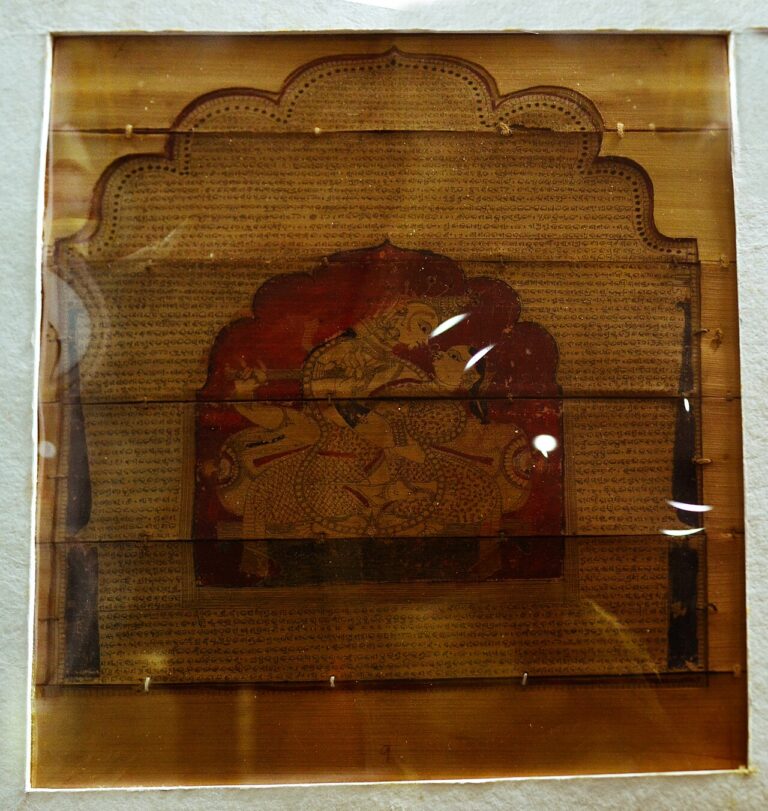
The word Ghari derives from the Sanskrit root Ghatika, which originally referred to a water vessel used for measuring time. In Odia linguistic tradition, the term evolved to signify both the time-measuring device and the unit of time itself. Historical inscriptions from the Ganga and Gajapati dynasties frequently mention the Ghari in administrative and religious contexts, indicating its central role in medieval Odisha. The copperplate grants of the Bhauma-Kara period contain references to time measurements that suggest an established system of temporal reckoning dating back to at least the eighth century. Temple inscriptions at Bhubaneswar, Puri, and Konark provide detailed records of how Ghari calculations determined the precise timing of daily rituals, festival celebrations, and the management of temple endowments.
The Water Clock: Technical Mastery of Ancient Odisha
The physical instrument known as Ghari or Ghati Yantra was essentially a water clock, though its construction reflected remarkable ingenuity specific to Odisha’s scientific tradition. A typical Ghari consisted of a large copper or brass vessel with a small aperture at the bottom, placed in a basin that collected the outflowing water. The vessel was calibrated so that it took exactly twenty-four minutes to empty completely, this duration constituting one Ghari. The level of water was marked with graduated scales, often engraved with symbols representing different periods of the day. Skilled artisans known as Karigars crafted these instruments with precision, and their knowledge was passed down through generations as a guarded family profession. The temples of Odisha employed full-time officials called Ghatikas or Niyogis whose sole responsibility was maintaining these water clocks and announcing the correct time for ritual observances.
The Gadi System: Mathematical Framework of Traditional Time
The Gadi system provided the mathematical infrastructure that made the Ghari functional within a larger temporal framework. One complete day and night, from sunrise to sunrise, was divided into sixty Gadis in the traditional Odia reckoning. Each Gadi equaled twenty-four minutes, meaning that sixty Gadis comprised exactly twenty-four hours. This division created a hexagesimal system remarkably similar to the Babylonian base-sixty approach to time, though developed independently within the Odia intellectual tradition. The Gadi was further subdivided into smaller units called Palas and Vikalas, allowing for precise measurement required for astronomical calculations and ritual timing. Twenty-four Palas made one Gadi, and sixty Vikalas constituted one Pala. This hierarchical structure enabled Odia astronomers and priests to calculate planetary positions, eclipse timings, and auspicious moments with remarkable accuracy that astonished later European observers.
Division of the Day: From Dawn to Midnight
The Odia day traditionally began at sunrise, not midnight as in the modern convention. The period from sunrise to sunset was called Divasa, while the period from sunset to the next sunrise was known as Ratri. Each of these periods was divided into four Paharas or watches, each Pahara containing fifteen Gadis or six hours. The first Pahara of the day, known as Pratah Kala, began with sunrise and was considered the most auspicious period for worship and intellectual pursuits. The Madhyahna Pahara covered midday, when the sun stood at its zenith and certain temples performed their principal offerings. The Aparahna Pahara marked the afternoon period, while the Sayankala Pahara encompassed the evening hours leading to sunset. The night watches had their own designations: Pradosha Kala for the first evening watch, Madhyaratra for midnight, and the final watch leading to dawn was called Usha Kala, the hour of the dawn goddess.
Temple Schedule: The Cosmic Clock in Sacred Architecture
The great temples of Odisha functioned as giant timekeeping apparatuses, their architecture designed to mark the passage of time through shadow patterns, light angles, and ritual sequences. The Jagannath Temple at Puri operates on a precise schedule dictated by the Ghari system that remains largely unchanged over centuries. The Mangala Arati at dawn, the Balya Bhoga offering in the early morning, the Sakala Dhupa at mid-morning, the Madhyahna Dhupa at noon, the Sandhya Dhupa at evening, and the Badasinghara Bhoga before the final closing all occur at specific Gadis determined by traditional calculations. The temple employs officials called Mudirashs who are responsible for announcing the correct Gadi for each ritual, and their authority in matters of temporal reckoning remains unquestioned even today. During special festivals like Snana Yatra and Ratha Yatra, the entire schedule shifts according to astronomical positions calculated using the traditional Gadi framework.
The Sun Temple at Konark: Architecture as Timepiece
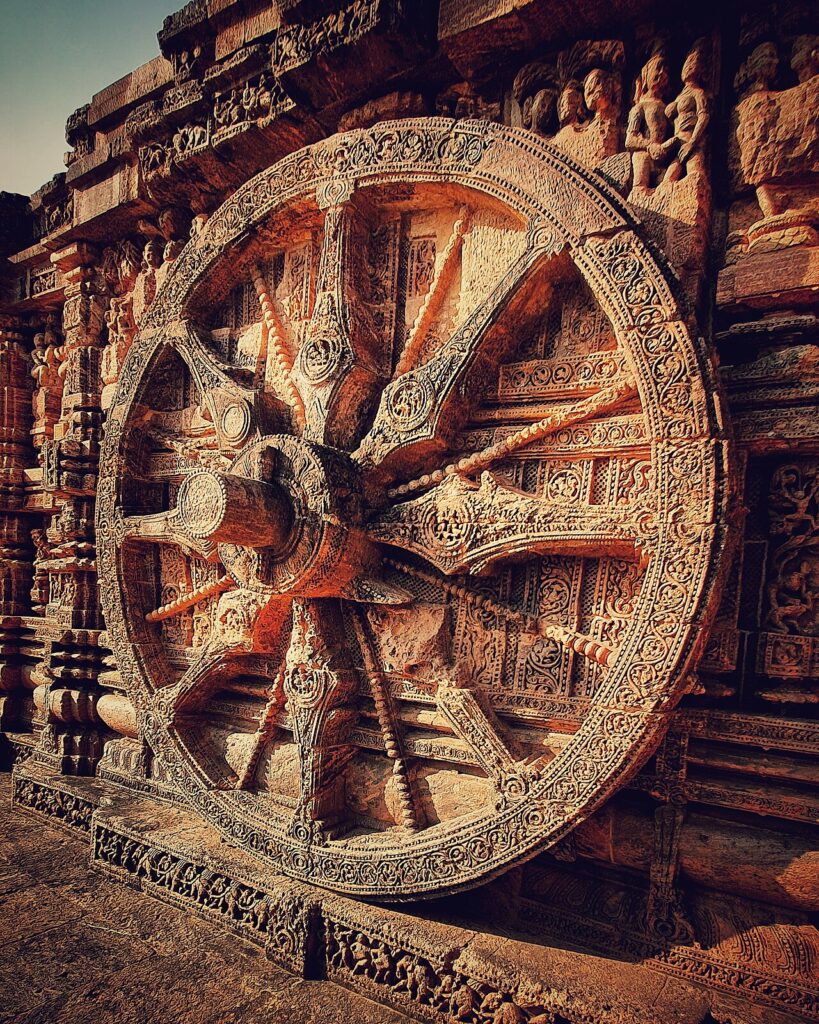
The Konark Sun Temple represents perhaps the most ambitious expression of timekeeping in stone ever attempted in human history. The temple was designed so that its wheels, often mistaken for chariot wheels, actually functioned as giant sundials. Each wheel had eight major spokes representing the eight Praharas of the day, and twenty-four minor divisions marking the hours. The shadow cast by the main temple structure moved across these wheels throughout the day, allowing observers to read the time with considerable accuracy. The orientation of the entire temple complex was calculated so that the first rays of the sun at different seasons would illuminate specific parts of the sanctum, effectively creating a calendar in stone. This integration of astronomical knowledge, architectural skill, and religious purpose demonstrates how deeply timekeeping permeated Odia civilization at its highest expressions.
Cultural Time Concepts: Cyclical and Sacred Temporality
Odia culture conceives time as fundamentally cyclical rather than linear. The concept of Kala encompasses not merely chronological duration but the cosmic force of destruction and regeneration embodied by Lord Shiva as Mahakala. Time in Odia thought moves through vast cycles called Kalpas, each lasting billions of years, within which smaller cycles of Yugas unfold. The present age is considered Kali Yuga, a period of spiritual decline that nonetheless offers individual salvation through devotion. This cosmic perspective profoundly influenced how ordinary Odias related to daily time. Every moment was understood as part of an eternal pattern, reducing anxiety about temporal scarcity while increasing attention to aligning personal actions with cosmic rhythms. The practice of observing auspicious moments or Muhurtas for important activities reflects this belief that specific points in the cyclical pattern possess unique spiritual potency.
The Panjika: Traditional Odia Calendar System
The Panjika or traditional Odia almanac represents the practical application of the Ghari and Gadi systems to daily life. Prepared annually by hereditary scholars known as Panjika Karas, typically belonging to Brahmin families with centuries of specialized knowledge, the Panjika contains detailed information about lunar days or Tithis, solar months or Masas, the movement of the sun through zodiac signs or Rasis, and the positions of planets. The Odia calendar follows a luni-solar system where months are based on lunar phases but adjusted periodically to maintain alignment with solar seasons. This requires the periodic insertion of an extra month called Adhika Masa, a calculation of considerable astronomical complexity. The Panjika lists auspicious and inauspicious times for various activities, festival dates, eclipse predictions, and agricultural recommendations, making it the single most consulted reference in traditional Odia households.
Odia Months and Their Agricultural Significance
The twelve months of the Odia calendar each carry distinct cultural and agricultural associations that reflect the intimate connection between timekeeping and the rhythms of the land. Baisakha, corresponding to April-May, marks the harvest season and the celebration of Akshaya Tritiya. Jyeshtha brings the scorching summer and the ritual observance of Savitri Brata. Ashadha ushers in the monsoon and the beginning of the agricultural cycle with Raja Parba, a festival celebrating menstruation and fertility. Shravana and Bhadraba are months of intense agricultural activity when the paddy fields are transplanted. Ashwina brings the autumn and the great Durga Puja celebrations. Kartika is the holiest month, marked by Kartika Purnima when thousands of pilgrims sail to the mouth of the river at Chandrabhaga. Margashira, Pausha, and Magha form the winter period with various domestic rituals. Phalguna brings spring and Holi, while Chaitra concludes the year with the sacred Chaitra Parba. Each month’s identity was inseparable from the agricultural activities and religious observances it contained.
Seasonal Divisions: The Ritu Chakra of Odisha
Traditional Odia timekeeping recognizes six seasons or Ritus, each spanning approximately two months, creating a rhythm that structured both agricultural practice and cultural life. Grishma, the summer season from mid-April to mid-June, was a period of intense heat when outdoor activities were minimized. Varsha, the monsoon from mid-June to mid-August, brought life-giving rain and the joyous Raja celebrations. Sharada, the autumn from mid-August to mid-October, offered pleasant weather and the major festival season. Hemanta, the pre-winter from mid-October to mid-December, saw the harvesting of autumn crops and preparations for winter. Shishira, the winter from mid-December to mid-February, was the season for marriage celebrations and household rituals. Vasanta, the spring from mid-February to mid-April, brought renewed vitality and the colorful observance of Dola Yatra. This seasonal framework ensured that human activities remained synchronized with natural cycles, a principle that modern environmental thinkers recognize as essential for sustainable living.
Nakshatra System: Lunar Mansions and Odia Astronomy
The twenty-seven Nakshatras or lunar mansions form another crucial layer of the traditional Odia timekeeping system. As the moon completes its orbit around the earth approximately every twenty-seven days, it passes through each Nakshatra for roughly one day. Each Nakshatra has specific associations with deities, natural forces, and human qualities that influence the interpretation of birth charts, marriage compatibility, and agricultural timing. The Odia Panjika tracks the moon’s position through these Nakshatras with precision, and many village rituals are timed according to specific Nakshatra configurations. The Rohini Nakshatra, associated with prosperity and growth, is considered particularly auspicious for planting crops. The Mrigashira Nakshatra influences decisions about cattle management. This system demonstrates how traditional Odia timekeeping integrated astronomical observation with practical knowledge and spiritual meaning in a seamless whole.
Decline and Preservation of Traditional Timekeeping
The introduction of mechanical clocks and standardized time during British colonial rule gradually displaced the Ghari system from everyday use. The railway system, in particular, required uniform time across regions, making traditional local timekeeping impractical for administrative purposes. However, the traditional system never completely disappeared. In the great temples of Odisha, particularly at Puri, the Ghari calculations continue to determine ritual schedules. The Panjika remains a vital publication, with millions of copies sold annually. Scholars at institutions like the Sri Jagannath Sanskrit Vishvavidyalaya in Puri continue to teach and research traditional astronomy and timekeeping. Recent years have seen renewed interest in traditional knowledge systems, and there are efforts to document the remaining Ghatika Yantras and interview the elderly practitioners who still understand their operation. This preservation effort recognizes that the Ghari system represents not merely antiquarian curiosity but a sophisticated intellectual achievement worthy of respect and study.
Living Legacy: Timekeeping in Contemporary Odia Culture
Despite the ubiquity of digital timekeeping, the ghost of the Ghari system continues to shape Odia cultural life in subtle but pervasive ways. The practice of consulting the Panjika before undertaking important activities remains widespread across all sections of Odia society. Festival dates are still determined by traditional calculations rather than government-declared holidays. The concept of auspicious and inauspicious times influences everything from house construction to business openings to travel plans. The agricultural calendar, though now supplemented by meteorological forecasts, still follows the traditional framework for determining planting and harvesting schedules. In literature, music, and dance, references to traditional time concepts appear frequently, indicating deep cultural embedding. The resilience of these practices suggests that the Ghari system addressed fundamental human needs for connecting with cosmic rhythms that modern timekeeping, for all its precision, cannot fully satisfy.
Conclusion: The Eternal Relevance of Sacred Time
The traditional Odia Ghari system of timekeeping represents far more than a primitive predecessor to modern clocks. It embodies a complete philosophical understanding of time as sacred, cyclical, and integrally connected to both cosmic order and human purpose. In an age when time has become a commodity to be saved, spent, or wasted, the Odia tradition offers a profound alternative vision where time is a river flowing through eternal patterns, and wisdom consists not in controlling this flow but in harmonizing with it. The preservation and understanding of this heritage matters not only for cultural pride but for the practical wisdom it contains about living in accordance with natural rhythms. As Odisha moves forward in the twenty-first century, carrying forward the insights of its ancient timekeeping traditions may prove essential for building a future that honors both human aspiration and ecological limits.