ମୁଣ୍ଡା ପିଠା: ଆଦିବାସୀ ପରମ୍ପରା
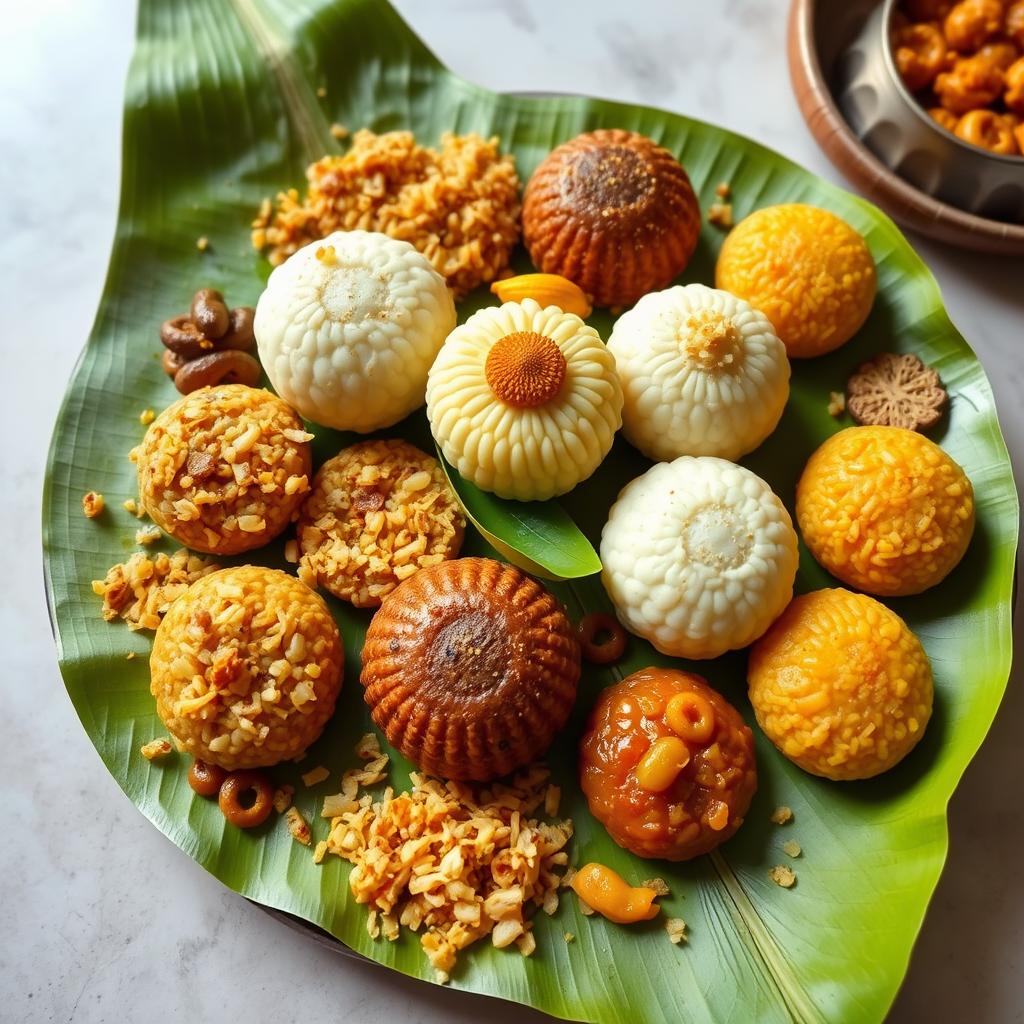
ମୁଣ୍ଡା ପିଠା ଓଡ଼ିଶାର ଆଦିବାସୀ ଅଞ୍ଚଳର ପାରମ୍ପରିକ ଭାତ-ପିଠା — ଅରୁଆ ଚାଉଳ ମଇଳି ଗଡ଼ାଇ ଭିତରେ ଗୁଡ଼/ନଡ଼ିଆ ପୁରଣ କରି ପତ୍ରରେ ସିଝା ଯାଏ। ମୟୂରଭଞ୍ଜ, କେନ୍ଦୁଝର, ସୁନ୍ଦରଗଡ଼ ଅଞ୍ଚଳରେ ଏହା ଉତ୍ସବ ଓ ଦୈନନ୍ଦିନ ଖାଦ୍ୟ ଦୁଇଟି ଯାକ।
ବିଶେଷତ୍ୱ
- ପାରମ୍ପରିକ ଭାପରେ ସିଝା — ତେଲ ବିନା, ସ୍ୱାସ୍ଥ୍ୟକର।
- ଗାଁ ମେଳା, କରମ ପର୍ବ ଓ ନୂଆଖାଇରେ ବାଧ୍ୟତାମୂଳକ।
- ଓଡ଼ିଆ ପିଠା ପରମ୍ପରା — ସମ୍ପୂର୍ଣ୍ଣ ତାଲିକା ସହ ତୁଳନା କରନ୍ତୁ।
ଆଦିବାସୀ ଖାଦ୍ୟ ସଂସ୍କୃତି ଏହି ପ୍ରସଙ୍ଗରେ; ମିଠା ପରମ୍ପରା ଆରିସା ପିଠା ଓ ଛେନା ପୋଡ଼ା ସହ ମିଶି ପଢ଼ନ୍ତୁ।
In English
The Soul of Odia Street Food Culture
Odisha’s street food culture is not merely about hunger or convenience. It is an ancient, living tradition that weaves together temple rituals, agrarian cycles, seasonal festivities, and the everyday poetry of Odia life. Unlike the aggressively spiced street foods of other Indian regions, Odia snacks speak a quieter, more nuanced language. They are built on the foundations of fermented lentils, steamed rice flour, minimal but precise spice interventions, and an almost devotional attention to texture. Every street corner in Cuttack, Bhubaneswar, Puri, or Sambalpur tells a story through its chaat stalls, pitha vendors, and the smoke rising from earthen stoves at dawn. This is a cuisine that has grown organically from the soil of Kalinga, shaped by centuries of temple kitchen innovations, tribal wisdom, and coastal abundance. Understanding Odia street food means understanding the Odia temperament itself: unhurried, deeply rooted, suspicious of unnecessary spectacle, and quietly confident in its own brilliance.
Munda Pitha: The Steamed Heart of Odia Tradition
Among the most revered traditional snacks of Odisha is the Munda Pitha, a steamed rice flour dumpling that occupies a sacred space in the state’s culinary imagination. The word “munda” refers to the head or the rounded shape, and the pitha is a testament to the Odia mastery of rice-based preparations. Made from a soft, pliable dough of soaked and ground rice, the Munda Pitha is filled with sweetened mixtures of grated coconut, jaggery, and sometimes black pepper or cardamom for warmth. The dumpling is then carefully sealed and steamed in a covered vessel, often on a layer of turmeric or banana leaves, until the outer shell becomes translucent and delicately supple. Munda Pitha is not a street food in the conventional sense of being sold from carts at every intersection. Instead, it appears during festival seasons, particularly Makar Sankranti and Kumar Purnima, when temporary stalls and home vendors emerge across the state to meet the enormous seasonal demand. The art of making Munda Pitha is passed down through generations of Odia women, and each family guards slight variations in the filling, the consistency of the dough, and the steaming technique. What makes Munda Pitha profoundly Odia is its restraint. There is no frying, no heavy syrup soaking, no elaborate garnishing. It is pure, clean, and honest food, where the natural sweetness of jaggery and the fragrance of fresh coconut are allowed to speak without competition. In the context of street and festival food culture, Munda Pitha represents the deep connection between Odia culinary identity and the agrarian calendar, a snack that arrives with the winter harvest and disappears with it, maintaining its seasonal dignity.
Dahibara Aloo Dum: The Undisputed Monarch of Cuttack
No discussion of Odia street food can begin anywhere else but with Dahibara Aloo Dum, the legendary snack that has defined Cuttack’s food identity for over a century. This is not a dish. It is an institution, a daily ritual, and for many Cuttackias, a reason to stay alive. The preparation involves two distinct components that merge into something transcendent on the plate. The dahibara is a soft, spongy lentil dumpling made from urad dal, fermented overnight to develop a light tang, then fried to a pale gold and immediately immersed in a bowl of thick, lightly spiced yogurt seasoned with roasted cumin, black salt, and a whisper of sugar. The aloo dum is a rich, deeply colored potato curry where baby potatoes are slow-cooked in a gravy built from onions, tomatoes, ginger, and a precise blend of spices that includes Kashmiri red chilies for color and heat in careful measure. The magic happens when the yogurt-soaked baras are drowned in the aloo dum gravy, creating a collision of temperatures, textures, and flavors that is almost impossible to describe adequately. The cold, tangy yogurt meets the hot, earthy gravy. The soft bara absorbs the spiced liquid and begins to disintegrate gently, while the potatoes provide firm, satisfying bites. It is garnished with chopped onions, green chilies, coriander, and sometimes a sprinkle of chaat masala and sev. Cuttack has an entire ecosystem dedicated to this dish. From the iconic stalls near Bidanasi and College Square to the hundreds of morning vendors who set up before sunrise, Dahibara Aloo Dum is consumed as breakfast, evening snack, and late-night comfort food with equal devotion. The rivalry between stalls is intense, and every Cuttack resident has a fiercely loyal allegiance to their preferred vendor, debates over which can continue for hours without resolution.
Bara Ghuguni: The Essential Odia Morning
If Dahibara Aloo Dum is the grand spectacle of Odia street food, then Bara Ghuguni is its quiet, indispensable backbone. Found at virtually every street corner, temple steps, and railway platform across Odisha, this combination of deep-fried lentil fritters and spiced yellow pea curry is the working-class fuel that powers the state. The bara is made from a batter of soaked urad dal or a mix of urad and chana dal, ground with minimal spices, sometimes with a hint of onion and green chili folded in, and deep-fried until crisp on the outside and soft within. The ghuguni is a curry of dried yellow peas, soaked overnight and cooked until tender but not mushy, in a base of onion, garlic, ginger, and a spice mix dominated by turmeric, cumin, and coriander, with potatoes often added for substance. What distinguishes Odia ghuguni from its counterparts in neighboring states is its relative mildness and its emphasis on the earthy flavor of the peas themselves rather than aggressive spicing. Bara Ghuguni is consumed with remarkable consistency across all social strata. A daily wage laborer eats it standing at a stall at six in the morning. A government officer stops for the same combination on the way to the secretariat. A college student survives an entire semester on it. It is typically served on a leaf plate or a steel plate, the baras placed on top of or beside a generous ladle of ghuguni, garnished with sliced onions, green chilies, and a squeeze of lemon. The dish has a meditative simplicity to it. It does not try to impress. It simply sustains, day after day, decade after decade, with unwavering reliability.
Chuda Dahi: The Gentle Poetry of Flattened Rice
Chuda Dahi is perhaps the most understated and underestimated of all Odia snacks, a dish that requires no cooking, no spice, and no pretension, yet delivers a satisfaction that is almost spiritual in its simplicity. At its core, it is flattened rice, or chuda, soaked in water until it softens just slightly while retaining a delicate bite, then mixed with fresh curd, sugar or jaggery, and sometimes banana pieces or grated coconut. The proportions are everything. Too much water and the chuda becomes a soggy mess. Too little and it remains hard and unyielding. The curd must be fresh, ideally homemade, with a gentle tang that balances the sweetness. The sugar must dissolve evenly. When made correctly, Chuda Dahi achieves a textural harmony that is remarkable, the slight chew of the rice playing against the smoothness of the curd, with the sweetness providing a clean, lingering finish. Chuda Dahi is deeply associated with the festival of Makar Sankranti, when it is prepared in virtually every Odia household and also sold at roadside stalls and temporary markets. But its appeal extends far beyond the festival calendar. It is a beloved breakfast option, an afternoon snack for children, a comfort food for the elderly, and a fasting food during religious observances. In Bhubaneswar’s old town lanes and in the bylanes of Puri, vendors sell Chuda Dahi from small stalls, the curd kept cool in earthen pots, the chuda prepared fresh in batches throughout the day. There is a meditative quality to eating Chuda Dahi. It slows you down. It asks nothing of you except attention to its quiet, honest flavors.
Gupchup: Odisha’s Own Pani Puri Identity
The rest of India knows it as pani puri or golgappa, but in Odisha, it is Gupchup, and the distinction is not merely linguistic. Odia Gupchup has its own identity, its own traditions, and its own fiercely loyal following. The puris are small, crisp, and hollow, made from suji or a mix of suji and atta, fried to a uniform golden shade. The filling is typically a mix of boiled chickpeas and mashed potato, sometimes with sprouted moong added for texture. But the soul of Gupchup is the pani, the spiced water, and here Odia vendors have developed a distinctive profile. The water is tart from tamarind, heat comes from green chilies rather than excessive red chili powder, and there is a noticeable presence of roasted cumin and fresh mint that gives it a brightness different from the heavier, darker panis of northern or western India. Gupchup vendors are among the most visible and vocal presences on Odia streets. Their stalls are marked by the distinctive glass case displaying stacks of puris, the large brass or stainless steel vessels holding the pani and the filling, and the rhythmic, almost musical calls of “Gupchup, Gupchup” that echo through markets and residential areas in the evenings. Eating Gupchup in Odisha is a communal experience. People stand around the vendor’s stall, eating one at a time as the vendor hands them over, the pace quickening as the tangy water creates an addictive craving. The vendor must work with extraordinary speed and precision, cracking each puri with a thumb, filling it, dipping it, and passing it to the customer in a fluid motion that never stops. Puri’s Gupchup, particularly near the Gundicha Temple and the Swargadwar area, has a legendary status, and Bhubaneswar’s Unit-1 Market and Saheed Nagar stalls are destinations in their own right.
The Dahibara Aludam Championship: Where Food Becomes Sport
In a remarkable testament to how seriously Odisha takes its street food, the Dahibara Aludam Championship has emerged as a cultural phenomenon that elevates a humble snack to the level of competitive sport. Organized annually in Cuttack, this event brings together the city’s most celebrated Dahibara Aloo Dum vendors to compete head-to-head, judged on multiple parameters including the texture and fermentation of the baras, the consistency and flavor of the dahi, the depth and balance of the aloo dum gravy, the freshness of garnishes, and the overall harmony of the combined dish. The championship is not a gimmick or a corporate-sponsored food festival. It is a grassroots celebration born from genuine civic pride and the deeply held belief that Cuttack’s Dahibara Aloo Dum is unmatched anywhere in the country. Thousands of people attend, standing in lines to taste and compare, debating the merits of each vendor with passionate intensity. The event has spawned social media movements, television coverage, and academic discussions about the anthropology of food and regional identity. What the Dahibara Aludam Championship reveals is the profound emotional relationship that Odia people have with their food. This is not consumption. This is devotion. The vendors themselves take the competition with extraordinary seriousness, often preparing for weeks, sourcing specific ingredients from particular markets, and refining their recipes with the precision of scientists. The championship has also had a tangible economic impact, drawing food tourists from other states and generating media attention that positions Cuttack as a significant destination on India’s street food map.
Food Tourism in Odisha: The Unexplored Frontier
Despite having one of the most distinctive and historically rich food cultures in India, Odisha remains an underexplored destination for food tourism, a situation that is both a challenge and an enormous opportunity. The state’s food tourism potential rests on several unique pillars. First, the temple food tradition of Puri’s Jagannath Temple, where the Mahaprasad is prepared in what is arguably the largest kitchen in the world, using techniques and recipes that are thousands of years old. Second, the tribal food traditions of the southern and western districts, where ingredients like mahua flowers, ragi, bamboo shoots, and indigenous greens create a cuisine that is entirely different from the mainstream Odia repertoire. Third, the coastal food culture of Balasore, Bhadrak, and Ganjam, where fish and prawn preparations reflect both Bengali and Andhra influences while maintaining a distinctly Odia character. Fourth, and most relevant to the street food conversation, the urban snack cultures of Cuttack, Bhubaneswar, Sambalpur, and Rourkela, each with its own specialties and signature vendors. Initiatives like the Dahibara Aludam Championship, street food walks in the old areas of Bhubaneswar and Puri, and social media documentation by young Odia food bloggers are slowly building awareness. The state government’s efforts to promote Odia cuisine at national and international platforms, including the designation of a specific day to celebrate Odia food, indicate a growing recognition of food as a cultural and economic asset. What Odisha needs now is infrastructure: organized food trails, better hygiene standards at street food stalls without losing their authentic character, packaging and branding of iconic snacks for wider distribution, and integration of food experiences into the standard tourist itineraries that currently focus almost exclusively on temples and monuments. The foundation is extraordinary. The world just needs to taste it.