ଓଡ଼ିଶାର ପ୍ରାଚୀନ ଶୈଳଚିତ୍ର
ଓଡ଼ିଶାର ପ୍ରସ୍ତରଚିତ୍ର ପରମ୍ପରା ହଜାର ହଜାର ବର୍ଷ ପୁରୁଣା — ଆଦିମ ମାନବଙ୍କ ଗୁମ୍ଫା କାନ୍ଥରେ ଆଙ୍କିଥିବା ଚିତ୍ର ଆଜି ମଧ୍ୟ ବିଦ୍ୟମାନ।
ପ୍ରମୁଖ ସ୍ଥାନ
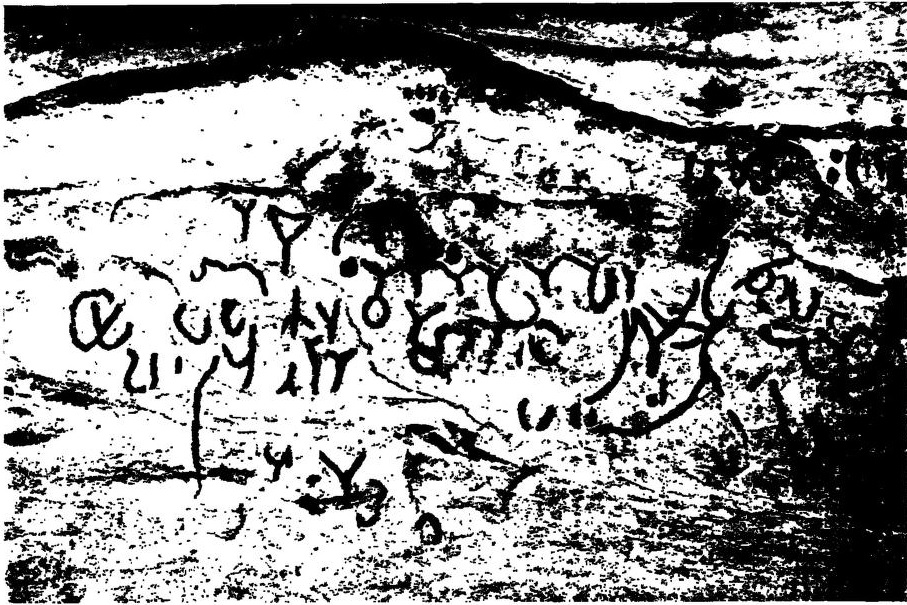
- ଯୋଗିମାଥା ଗୁମ୍ଫା (ସୁନ୍ଦରଗଡ଼), ଉଷାକୋଠି (ସମ୍ବଲପୁର), ଗୁଡ଼ହାଣ୍ଡି (ନୂଆପଡ଼ା) — ଲାଲ-କଳା ଖନିଜ ରଙ୍ଗରେ ଅଙ୍କିତ।
- ଚିତ୍ର ବିଷୟ: ଶିକାର ଦୃଶ୍ୟ, ନାଚ, ସୂର୍ଯ୍ୟ ଚିହ୍ନ, ପଶୁ — ଆଦିମ ସମାଜର ଦର୍ପଣ।
- ପ୍ରାକ୍-ଐତିହାସିକ ଯୁଗରେ (ଖ୍ରୀ.ପୂ. ୧୦୦୦+ ପୂର୍ବ) ଏହି କଳାର ବିକାଶ।
ଏହି ପରମ୍ପରାର ଆଧୁନିକ ଉତ୍ତରାଧିକାର — ସାଉରା କାନ୍ଥଚିତ୍ର; ଆଦିବାସୀ କଳା ଏଠାରେ; ଓଡ଼ିଶା ଇତିହାସ ଏଠାରେ।
In English
The Silent Canvas of Prehistoric Odisha: An Introduction to Rock Art
The landscape of Odisha, often celebrated for its magnificent temples, sculptural traditions, and vibrant performing arts, holds beneath its verdant hills and lateritic plateaus an extraordinary repository of human expression that predates all written history. The rock art and cave paintings of Odisha represent one of the most significant yet insufficiently explored chapters of Indian prehistory. Scattered across the length and breadth of the state, from the western tracts of Sundargarh and Sambalpur to the southern reaches of Kalahandi and Koraput, these ancient rock shelters bear witness to the cognitive and artistic awakening of primitive human communities who inhabited this land tens of thousands of years ago. The rock art of Odisha is not merely an assortment of primitive drawings; it is a visual archive of immense archaeological significance that illuminates the trajectory of human evolution, adaptation, and cultural development in this eastern Indian region. These paintings, executed on the walls and ceilings of natural rock shelters, offer an unmediated glimpse into the world of early humans who roamed the forests and river valleys of ancient Odisha, leaving behind their stories in mineral pigments that have remarkably survived the ravages of time.
Geological and Environmental Context of Odisha’s Rock Shelters
The abundance of rock shelters in Odisha is directly attributable to its unique geological formation. The state’s western and southern districts are characterized by extensive laterite formations, granite outcrops, and sandstone ridges that have been shaped over millennia by weathering and erosion into natural caves and overhanging rock faces. These formations, particularly prevalent in the Eastern Ghats and the adjoining plateaus, provided ideal dwelling places for prehistoric communities. They offered protection from the elements, security from predators, and strategic vantage points overlooking river valleys and forest corridors that served as hunting grounds. The proximity of these rock shelters to perennial water sources such as the Brahmani, IB, Tel, and Indravati rivers further enhanced their suitability for sustained human habitation. It is within these sheltered spaces, protected from direct rainfall and excessive sunlight, that the prehistoric artists of Odisha found both their canvas and their gallery, creating works that would endure for epochs. The environmental context is crucial to understanding the subject matter of these paintings, as the artists invariably depicted the world they inhabited, the animals they hunted, and the landscapes they traversed.
Vikramkhol: The Monumental Gallery of Early Expression
Situated in the Jharsuguda district of western Odisha, Vikramkhol stands as one of the most celebrated and extensively documented rock art sites in the state. The site derives its name from local folklore, yet its true significance lies in the remarkable assemblage of prehistoric paintings and engravings that adorn its sandstone walls. Vikramkhol features a sprawling rock shelter with a wide overhang that would have accommodated a substantial community. The artworks here are executed primarily in red ochre, a pigment derived from iron oxide that was universally favored by prehistoric artists across the subcontinent. What distinguishes Vikramkhol is the sheer variety and complexity of its pictorial repertoire. The paintings include geometric patterns, linear designs, stylized human figures in dynamic postures, and a rich menagerie of animal forms. Among the animal depictions, cattle figures are particularly prominent, suggesting a pastoral dimension to the economy of the community that created these works. Some scholars have also identified what appear to be hunting scenes, with human figures armed with spears and bows pursuing deer and other game animals. The presence of both pictorial paintings and petroglyphs, or rock engravings, at Vikramkhol indicates a prolonged period of occupation and artistic activity, potentially spanning multiple cultural phases from the Upper Paleolithic through the Mesolithic and into the Neolithic period.
Ushakothi: The Painted Wilderness of Sundargarh
The Ushakothi rock art site, located in the Sundargarh district near the border with Chhattisgarh, represents another extraordinary concentration of prehistoric artistic expression in Odisha. Nestled within the dense forests of the Bonai subdivision, Ushakothi comprises a cluster of rock shelters that together form what can only be described as an open-air art gallery of antiquity. The paintings at Ushakothi are predominantly executed in red and white pigments, with red ochre being the dominant medium. The subject matter reveals a community deeply engaged with its natural environment. Elaborate depictions of wild animals, including elephants, deer, boar, and various species of reptiles and birds, dominate the pictorial space. Human figures at Ushakothi are rendered in a distinctive stylistic manner, often shown as stick figures or highly schematic forms engaged in activities such as hunting, dancing, and possibly ritualistic performances. Of particular interest are the composite scenes that appear to narrate sequential events, suggesting an early form of visual storytelling. Some panels at Ushakothi also feature abstract geometric motifs, including spirals, concentric circles, and ladder-like patterns, whose precise meaning remains a subject of scholarly debate. The strategic location of Ushakothi, overlooking a fertile river valley, reinforces the understanding that these rock shelters were not merely artistic ateliers but functional habitation sites where daily life, subsistence activities, and ritual practices converged in a dynamic interplay.
Gudahandi: The Enigmatic Canvas of Kalahandi
In the southern district of Kalahandi, the rock shelters of Gudahandi present a fascinating and somewhat distinct tradition of prehistoric art that adds important dimensions to our understanding of Odisha’s ancient cultural landscape. The Gudahandi site takes its name from the peculiar shape of the surrounding hills, which resemble a pile of guda, or jaggery. The rock paintings here are characterized by their refined execution and the sophistication of their compositional arrangements. Unlike some of the more dynamic hunting scenes found at other Odisha sites, Gudahandi features a notable concentration of pastoral and sedentary themes. Cattle are depicted with remarkable anatomical accuracy, suggesting intimate familiarity with these animals on the part of the artists. There are also scenes that appear to depict processions, communal gatherings, and what may be interpreted as early forms of social organization beyond the simple hunting band. The pigment technology at Gudahandi demonstrates considerable expertise, with some paintings showing the use of multiple colors within a single composition, a relatively rare feature in Indian rock art. The presence of these more complex, thematically organized compositions at Gudahandi has led some archaeologists to propose that the site may represent a relatively later phase of rock art tradition, possibly corresponding to the Chalcolithic period when communities were transitioning from purely hunter-gatherer lifestyles to more settled agrarian and pastoral economies.
Primitive Human Settlements and the Ecology of Survival
The rock art sites of Odisha cannot be properly understood in isolation from the broader pattern of primitive human settlements that dotted the prehistoric landscape of the region. Archaeological investigations in the vicinity of these rock shelters have yielded evidence of continuous human occupation stretching back to the Lower Paleolithic period. The tool assemblages recovered from these sites include hand axes, cleavers, scrapers, and microliths, charting the technological evolution of human communities from the rough stone tools of early hominins to the refined microlithic implements of later Mesolithic hunter-gatherers. The distribution of these settlements follows a clear ecological logic, with concentrations occurring near river confluences, at the margins of forested plateaus, and along migratory corridors of game animals. The rock shelters served as seasonal base camps from which these communities would launch hunting expeditions, gather edible plants and fruits, and process their kills. The archaeological record suggests that the prehistoric inhabitants of Odisha possessed a detailed knowledge of their environment, exploiting a wide range of ecological niches and resources. The transition from the Paleolithic to the Mesolithic period, reflected in the rock art through changes in subject matter and technique, corresponds to significant shifts in climate and environment, particularly the drying of conditions that reduced forest cover and created more open grasslands, thereby altering the available fauna and forcing adaptive responses from human communities.
Thematic Analysis: Hunting, Ritual, and the Prehistoric Mind
A closer examination of the thematic content of Odisha’s rock art reveals the complex interplay between subsistence activities, social organization, and spiritual belief that characterized prehistoric life. Hunting scenes constitute the most dramatic and immediately recognizable category of imagery. These compositions typically show human figures, often armed with bows, arrows, or spears, in pursuit of various animals. However, these depictions are rarely simple documentary records of hunting activities. Many scholars interpret them as possessing a magico-religious dimension, serving a sympathetic function in which the act of depicting a successful hunt was believed to influence the outcome of actual hunting expeditions. The frequent exaggeration of certain anatomical features, such as the enlarged horns of deer or the tusks of elephants, may reflect a symbolic emphasis on the desirable qualities of prey animals. Beyond hunting, the rock art of Odisha contains significant evidence of ritual and ceremonial life. Scenes depicting groups of human figures in rhythmic, coordinated postures are widely interpreted as communal dances, which likely served important social bonding and ceremonial functions. The geometric and abstract motifs that accompany many figurative compositions may represent stylized elements of the natural world, territorial markers, or symbolic systems whose meanings have been lost to time. Together, these diverse thematic elements paint a picture of prehistoric Odisha as a region inhabited by communities of considerable cognitive sophistication, capable of abstract thought, symbolic communication, and complex social organization.
Archaeological Significance and Dating Challenges
The rock art of Odisha occupies a position of paramount importance in the broader framework of Indian archaeology and the study of human prehistory in South Asia. These sites provide primary evidence for the antiquity of human settlement in eastern India and contribute significantly to ongoing debates about the routes and chronologies of early human migration across the subcontinent. The stylistic and thematic parallels between Odisha’s rock art and that found in central Indian sites such as Bhimbetka, as well as sites in northeastern and southern India, point to the existence of widespread cultural networks and shared symbolic vocabularies among prehistoric communities across vast geographical distances. However, the precise dating of rock art remains one of the most challenging problems in archaeological science. Unlike portable artifacts that can be extracted from stratified deposits and subjected to radiocarbon dating, rock paintings are fixed to their geological substrate, making direct dating extremely difficult. Archaeologists have relied on a combination of indirect methods, including stylistic comparison with datable artifacts, analysis of superimposition sequences where newer paintings overlay older ones, and occasionally scientific techniques such as optically stimulated luminescence dating of associated sediment deposits. Based on these approaches, the rock art of Odisha is generally assigned a broad chronological range spanning from the Upper Paleolithic period, approximately thirty thousand years ago, through the Mesolithic and Neolithic periods, with some traditions potentially extending into historical times. This extended chronology underscores the remarkable continuity of the rock art tradition in Odisha and its value as a longitudinal record of cultural change.
Conservation Challenges and the Future of Odisha’s Rock Art Heritage
Despite their extraordinary significance, the rock art sites of Odisha face a constellation of threats that jeopardize their preservation for future generations. Natural weathering processes, including flaking of the rock surface, biological colonization by lichens and mosses, and water seepage, pose ongoing challenges to the physical integrity of the paintings. However, the more immediate and destructive threats are anthropogenic in nature. The expansion of mining activities, particularly in mineral-rich western Odisha, has brought industrial operations into dangerous proximity with several rock art sites. Agricultural encroachment, deforestation, and unregulated tourism have also taken their toll. Vandalism, whether in the form of deliberate defacement or well-intentioned but damaging attempts at restoration by local communities, remains a persistent concern. The conservation of Odisha’s rock art requires a multi-pronged strategy that combines scientific documentation, environmental monitoring, community engagement, and statutory protection. Comprehensive photographic and photogrammetric documentation of all known sites is an urgent priority, creating a permanent record that can guide conservation efforts and serve as a resource for scholarly research. Equally important is the development of site management plans that balance the legitimate interests of local communities with the imperative of preservation. Educational programs that foster a sense of ownership and pride among local populations can be particularly effective in deterring vandalism and promoting stewardship. The rock art of Odisha is an irreplaceable treasure of human heritage, and its preservation demands the same level of attention and resources that are routinely devoted to the state’s more celebrated monumental heritage.
Ancient Odisha Civilization: Rock Art as the Foundation of Cultural Memory
The rock art and cave paintings of Odisha are not merely relics of a remote and irrelevant past; they represent the foundational layer of a cultural tradition that would eventually give rise to one of the most remarkable civilizations of eastern India. The aesthetic sensibilities, symbolic vocabularies, and narrative impulses discernible in these prehistoric paintings find their echoes in the later artistic achievements of Odisha, from the iconographic programs of early Buddhist and Jain sites to the sculptural grandeur of the medieval temples at Bhubaneswar, Puri, and Konark. The transition from the anonymous rock artist to the named master sculptor of historical times represents not a break in tradition but a continuous evolution of creative expression rooted in the deep cultural memory of the land. The prehistoric communities who painted the shelters of Vikramkhol, Ushakothi, and Gudahandi were the ancestors of the people who would build the great cities of ancient Kalinga, who would forge trade networks spanning the Indian Ocean, and who would produce some of the finest works of art and architecture ever created in the Indian subcontinent. To study the rock art of Odisha is to encounter the very origins of this extraordinary cultural trajectory, to witness the first tentative steps of the human mind as it reached outward to comprehend and represent the world through the transformative power of art. In the silent galleries of Odisha’s rock shelters, we hear the oldest voices of this ancient land, speaking to us across the vast expanse of time in a language of line, color, and form that remains profoundly eloquent and universally moving.