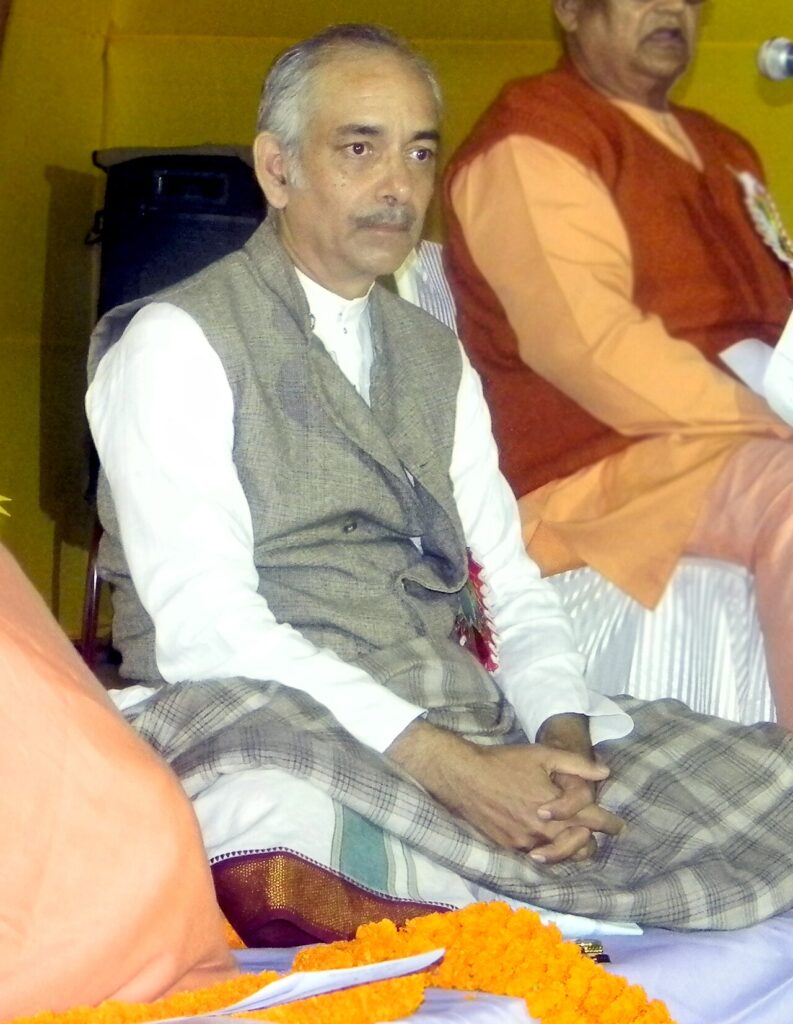
ଗଜପତି ମହାରାଜା ଦିବ୍ୟସିଂହ ଦେବ
ପୁରୀର ବର୍ତ୍ତମାନ ଗଜପତି ମହାରାଜା ଦିବ୍ୟସିଂହ ଦେବ (ଜନ୍ମ ୧୯୫୩) — ଗଜପତି ରାଜବଂଶର ଏକାଦଶ ପ୍ରତିନିଧି, “ଠାକୁର ରାଜା” ଭାବରେ ପରିଚିତ। ପିତା ବୀରକିଶୋର ଦେବଙ୍କ ଦେହାନ୍ତର ପରେ ୧୯୭୦ ମସିହାରେ, ୧୭ ବର୍ଷ ବୟସରେ ସିଂହାସନ ଆରୋହଣ କରିଥିଲେ।
ଭୂମିକା
- ଜଗନ୍ନାଥ ମନ୍ଦିରର ପ୍ରଥମ ସେବାୟତ — ରଥଯାତ୍ରା ଓ ନୀତି ପରମ୍ପରାରେ କେନ୍ଦ୍ରୀୟ ପ୍ରତିଷ୍ଠା।
- ଶ୍ରୀମନ୍ଦିର ପ୍ରଶାସନ, ଐତିହ୍ୟ ସଂରକ୍ଷଣ ଓ ରାଜ୍ୟ ଅନୁଷ୍ଠାନରେ ମାନଦଣ୍ଡିତ ପଦବୀ।
- ଡୋଭର୍ (ଇଂଲଣ୍ଡ)ରେ ଶିକ୍ଷା; ଆଇନ ପାସ।
ଗଜପତି ବଂଶର ଇତିହାସ ଅଲଗା ପ୍ରସଙ୍ଗରେ — ସ୍ୱାଧୀନତା ପରେ ରାଜତନ୍ତ୍ର ଉଠିଲେ ମଧ୍ୟ ଧର୍ମୀୟ ମର୍ଯ୍ୟାଦା ରହିଛି।
In English
The Gajapati Maharaja of Puri: Legacy and Continuity of Odisha’s Titular Sovereignty
The Gajapati Maharaja of Puri stands as one of the most revered and culturally significant royal figures in the eastern Indian state of Odisha. Despite the abolition of princely states and the integration of erstwhile kingdoms into the Indian Union, the Gajapati Maharaja continues to command immense respect, not merely as a ceremonial figurehead but as the living embodiment of a sacred tradition that stretches back over five centuries. The institution of the Gajapati is inseparable from the identity of Odisha itself, woven deeply into the religious, social, and political fabric of the region. The title “Gajapati,” meaning “Lord of Elephants,” was historically associated with the mighty kings of the Suryavamsi Gajapati dynasty who ruled over a vast empire stretching from the Ganges in the north to the Kaveri in the south during the fifteenth and early sixteenth centuries. Today, the Gajapati Maharaja of Puri serves as the titular king of Odisha and, more importantly, as the supreme custodian of the Shri Jagannath Temple, a role that places him at the very heart of Hindu devotional life.
Historical Roots and the Gajapati Dynasty Connection
The origins of the Gajapati title can be traced to the illustrious Suryavamsi dynasty founded by Kapilendra Deva in 1435 CE. Kapilendra Deva, born in a humble family, rose to power through sheer military genius and political acumen, overthrowing the preceding Eastern Ganga dynasty and establishing an empire that became the most powerful political entity in eastern India during its time. He assumed the title “Gajapati” to signify his supreme authority, and under his rule, the empire reached its zenith. His successors, including Purushottama Deva and Prataparudra Deva, continued to use this title and maintained the grandeur of the dynasty. However, with the defeat of Prataparudra Deva at the hands of the Golkonda and Bijapur sultanates in the mid-sixteenth century, the great Gajapati empire disintegrated. It was from this fragmented political landscape that Ramachandra Deva I, a descendant of the Gajapati lineage, established a subsidiary kingdom at Khurda in the late sixteenth century and, critically, assumed the title of Gajapati, thereby preserving the continuity of the dynasty’s prestige and its sacred association with Lord Jagannath. This act of assuming the Gajapati title was not merely a political gesture; it was a declaration of spiritual sovereignty, linking the Khurda ruling house directly to the golden age of Odishan imperialism and, more significantly, to the service of Jagannath.
Ramachandra Deva I: The Founder of the Puri Gajapati Lineage
Ramachandra Deva I, who ascended to power around 1578 CE, is regarded as the progenitor of the present Gajapati dynasty of Puri. His significance lies not in military conquest but in the strategic and spiritual realignment of his royal authority around the worship of Lord Jagannath. Recognizing that political power had diminished considerably under the pressure of Mughal expansion, Ramachandra Deva I wisely shifted the basis of his legitimacy from territorial sovereignty to religious stewardship. He established his capital at Khurda, located at a manageable distance from Puri, and made it his primary mission to safeguard the rituals, traditions, and administrative integrity of the Jagannath Temple. It was during his reign that the formal association between the Gajapati title and the temple’s supreme oversight became firmly institutionalized. He is credited with formally organizing the temple’s ritual calendar, strengthening the system of sevaks (servitors), and ensuring that the king himself performed the most critical ceremonial functions. This strategic pivot from political empire to spiritual kingdom proved remarkably enduring, allowing the Gajapati dynasty to survive the collapse of Mughal authority, the turbulence of Maratha rule, and eventually the British colonial period, each time reinventing itself as the indispensable religious authority rather than a threatened political power.
From Khurda to Puri: The Evolution of the Royal Seat
For several centuries, the Gajapati Maharajas maintained their capital at Khurda, from where they discharged their duties towards the Jagannath Temple. The Khurda kingdom faced repeated challenges, including the devastating attack by the Marathas in the mid-eighteenth century and later the aggressive expansionism of the British East India Company. The final military resistance of the Khurda Rajas against British rule, culminating in the Paika Rebellion of 1817 under Mukunda Deva II, marked the end of any meaningful political autonomy. The British annexed Khurda and reduced the Gajapati to the status of a pensioned zamindar. Despite this severe political diminution, the British recognized the immense religious authority of the Gajapati and did not interfere with his ceremonial role at Puri. Over time, particularly after India’s independence and the abolition of privy purses in 1971, the royal family gradually shifted its primary residence to Puri itself, reinforcing the direct connection between the Gajapati and the temple. Today, the royal palace in Puri serves as both the residence of the Maharaja and the administrative nerve center for his religious obligations.
The Gajapati as Adhyaksha of the Jagannath Temple
The most important and defining role of the Gajapati Maharaja is his position as the Adhyaksha, or the supreme head, of the Shri Jagannath Temple at Puri. This is not a role conferred by any modern legislation or government appointment; it is a sacral duty derived from ancient tradition, codified in the temple’s record of rights and recognized by successive regimes, including the current Shri Jagannath Temple Act of 1955 administered by the Government of Odisha. Under this act, while the day-to-day management of the temple is handled by the Shri Jagannath Temple Administration Committee, chaired by a government-appointed administrator, the Gajapati Maharaja retains a unique and irreplaceable position. He is the first sevaka of Lord Jagannath, a status that places him above all other categories of temple servants, regardless of their ritual seniority or Brahminical status. This unique arrangement reflects the deeply egalitarian and syncretic traditions of Jagannath culture, where devotion and royal service are valued above caste hierarchy. The Gajapati’s authority extends to overseeing the proper conduct of all major rituals, resolving disputes among sevaks, and ensuring that the temple’s ancient customs are not violated by modern administrative convenience.
Royal Duties and Ceremonial Roles
The ceremonial responsibilities of the Gajapati Maharaja are elaborate, precisely defined, and deeply symbolic. The most famous of these is the Cherajhara ritual, performed on the day of Snana Purnima, the full moon day of the Jyeshtha month, when the deities are given their ceremonial bath. During this ritual, the Gajapati sweeps the chariots with a golden broom, an act known as Chera Pahanra, which is perhaps the most iconic image associated with his role. This sweeping of the chariot floors is laden with profound philosophical meaning: it demonstrates that before the supreme lord, even the greatest earthly king is nothing more than a humble servant. The Gajapati also performs the ritual of Gajapati Seva on specific occasions, where he personally offers food and other articles to the deities. During the Nabakalebara, the great renewal ceremony held every twelve to nineteen years when the wooden idols of the deities are replaced, the Gajapati plays a central role. He performs the Brahma Paribartan-related rituals and is responsible for conducting the burial of the old idols in the Koili Baikuntha, the sacred burial ground within the temple precincts. Additionally, the Gajapati is the only person authorized to perform the Netra Utsav ritual during Anasara, the period when the deities are believed to be ill after the Snana Purnima, and he has the exclusive right to perform certain specific offerings that no other sevaka can undertake.
The Chera Pahanra: A Ritual of Divine Subservience
The Chera Pahanra ceremony deserves special elaboration because it encapsulates the entire theological and philosophical basis of the Gajapati’s authority. On the day of the Rath Yatra, after the deities are installed on their respective chariots, the Gajapati Maharaja arrives in a decorated palanquin, dressed in simple white clothing, symbolizing renunciation of royal splendor in the presence of the divine. He first offers prayers and then proceeds to sweep the floors of all three chariots — those of Lord Jagannath, Lord Balabhadra, and Devi Subhadra — with a golden broom. He then sprinkles sandalwood water on the cleaned surfaces. This ritual is performed before the chariots begin their journey to the Gundicha Temple. The sight of a king, who in ancient times commanded vast armies and ruled millions, humbly sweeping the floor of a chariot is a powerful demonstration of the Vaishnava principle that all worldly power is ultimately subordinate to divine will. Historical records suggest that even the great Gajapati kings of the medieval period, at the height of their political power, performed this ritual without hesitation, understanding that their legitimacy as kings derived precisely from their willingness to be servants of Jagannath. The continuity of this ritual from the medieval period to the present day is a remarkable testament to the unbroken tradition that the Gajapati dynasty represents.
Temple Administration and the Sevak System
Beyond the grand public ceremonies, the Gajapati Maharaja plays a crucial behind-the-scenes role in the administration of the temple’s vast and complex sevak system. The Jagannath Temple has thousands of hereditary sevaks, organized into various categories known as Nijogs, each responsible for specific ritual or service functions. Disputes among these sevaks over ritual precedence, share of offerings, or interpretation of traditional practices are common and can sometimes disrupt temple proceedings. The Gajapati, as the traditional head, has historically served as the final arbiter in such disputes. His decisions on matters of ritual correctness carry immense weight, as they are based on family tradition and the recorded customs preserved in the temple’s manuscripts. Even in the current administrative framework, where the Temple Administration Committee and the state government handle management issues, the Gajapati’s opinion is sought on sensitive ritual matters. The Maharaja also maintains a direct relationship with several key categories of sevaks, particularly those involved in the most sacred rituals, and his endorsement is considered essential for any significant changes to traditional practices. This role requires not just nominal authority but deep knowledge of the temple’s scriptures, the Sanskrit and Odia textual traditions governing its rituals, and an intimate understanding of the complex web of relationships among the servitor community.
The Lineage from Ramachandra Deva to the Present
The lineage of the Puri Gajapati from Ramachandra Deva I to the present day represents one of the oldest unbroken royal lineages in India, spanning over four centuries. Each successive Gajapati has had to navigate the challenges of his era while maintaining the sacred trust associated with the title. Following Ramachandra Deva I, notable rulers included Purushottama Deva II, who dealt with Mughal pressures, and the various Khurda Rajas who resisted Maratha and British encroachments. The transition from political rulers to religious custodians was gradual but complete by the early twentieth century. In the post-independence period, the Gajapati Maharajas have focused entirely on their religious and cultural roles. The current Gajapati Maharaja, Dibyasingha Deva, who ascended to the gadi in 1970, has been particularly active in asserting the traditional rights and prerogatives of his position in the modern administrative context. He has been vocal on issues such as the protection of the temple’s ritual integrity, the proper conduct of the Nabakalebara ceremony, and the need to balance modern governance with ancient tradition. His stewardship has ensured that the Gajapati’s role remains relevant and respected in contemporary Odisha, even as the state government’s administrative role in temple management has expanded significantly.
Cultural Significance and Symbolic Authority
The cultural significance of the Gajapati Maharaja extends far beyond the boundaries of the Jagannath Temple. In Odisha, the Gajapati is regarded as the Chalanti Pratima, the living image, of Lord Jagannath’s authority on earth. This conception elevates the Gajapati above the realm of ordinary politics and into the domain of sacred geography and cultural identity. The people of Odisha, regardless of their political affiliations, social status, or religious denomination, hold the Gajapati in deep reverence. His presence at public functions, religious gatherings, and cultural events is considered auspicious and lending dignity to the occasion. The Gajapati also serves as a vital link between Odisha’s glorious medieval past and its modern identity. At a time when regional identities are being reshaped by globalization and political realignment, the institution of the Gajapati provides a sense of historical continuity and cultural rootedness. The rituals he performs, the traditions he upholds, and the very title he bears are living connections to the era when Odisha was a major power in the Indian subcontinent. Furthermore, the Gajapati’s role has significant implications for the broader Hindu diaspora, as the Jagannath Temple attracts millions of pilgrims from across India and the world, all of whom witness the unique spectacle of a king serving as a servant of god.
The Gajapati in the Modern Era: Challenges and Adaptations
The modern era has presented unique challenges to the institution of the Gajapati. The abolition of privy purses and the integration of former princely states into the democratic framework of India meant the loss of all remaining political privileges and state financial support. The Gajapati Maharaja now functions entirely within the ambit of religious and cultural authority, without any constitutional or political backing. This requires a delicate balance: the Maharaja must assert his traditional prerogatives firmly enough to prevent the erosion of ancient customs, while remaining respectful of the democratic and legal frameworks that govern temple administration in independent India. The growing intrusion of politics into temple affairs, the increasing commercialization of religious practices, and the pressures from various sevak groups seeking greater benefits have all complicated the Gajapati’s task. Additionally, the advent of social media and twenty-four-hour news coverage means that every ritual, every decision, and every perceived slight is subject to intense public scrutiny, a far cry from the more insulated environment in which previous Gajapatis operated. Despite these challenges, the institution has shown remarkable resilience, adapting to modern communication methods to reach devotees, engaging with legal processes to protect traditional rights, and maintaining the dignity and sanctity of the ceremonial roles that define the Gajapati’s existence.
Conclusion: The Enduring Throne of Service
The Gajapati Maharaja of Puri represents one of the most fascinating paradoxes of Indian royalty: a king whose greatest glory lies in his willingness to be a servant. From the imperial ambitions of Kapilendra Deva to the spiritual kingship of Ramachandra Deva I, and from the resistance of the Khurda Rajas to the ceremonial stewardship of the present Gajapati, this institution has undergone a remarkable transformation while preserving its essential character. The Gajapati is not merely a historical relic or a cultural curiosity; he is a functioning, essential component of the living tradition of Jagannath worship. His daily existence, his ceremonial duties, and his administrative oversight of the temple’s ritual life constitute a form of continuous worship that has no parallel in the Hindu world. As long as the Jagannath Temple stands at Puri, and as long as the Rath Yatra draws millions to witness the lord’s journey, the Gajapati Maharaja will remain the indispensable human instrument through which the divine will is honored on earth. The continuity from Ramachandra Deva to the present is not just a genealogical fact; it is a sacred thread that binds the past, present, and future of Odisha’s civilization into a single, unbroken fabric of devotion.