ଖଣ୍ଡୁଆ ପଟ୍ଟ ଶାଢ଼ୀ: ନୂଆପତ୍ତଣର ବୁଣାକାରୀ ଐତିହ୍ୟ
Khandua Silk Saree: Nuapatna’s Timeless Weaving Heritage
କଟକ ଜିଲ୍ଲାର ନୂଆପତ୍ତଣ-ମଣିପୁର ଅଞ୍ଚଳର ଖଣ୍ଡୁଆ ପଟ୍ଟ — ଓଡ଼ିଶାର ଅନ୍ୟତମ ପ୍ରସିଦ୍ଧ ବୁଣାକାରୀ ପରମ୍ପରା। କେତେଦିନ ସାଧା ଲୁଗା ଗୁଡ଼ିକୁ “ଖଣ୍ଡୁଆ” କୁହାଯାଏ; ଏହାର ଶାଢ଼ୀ ଓ ଲୁଗା ଉଭୟ ପ୍ରସିଦ୍ଧ। ବିଶେଷ ଆକର୍ଷଣ — ଏହାର ଇକାଟ୍ ବନ୍ଧା କଳା ଓ ବୁଣା ଶବ୍ଦ (“କ୍ଷେତ୍ରେଶ୍ୱର” ନାମକ ପ୍ରସିଦ୍ଧ ପଟ୍ଟ)।
ଐତିହ୍ୟ ଓ ପରିଧାନ
- ଜଗନ୍ନାଥଙ୍କ ବେଶ — “ବଡ଼ ଥାଙ୍ଗୁଆ” ଓ ସାଧା ବେଶରେ ଖଣ୍ଡୁଆ ପଟ୍ଟ — ଶ୍ରୀମନ୍ଦିର ପରମ୍ପରା।
- ଲାଲ-କଳା-ଧଳା ମେଘବଲ୍ଲଭ ନକ୍ସା ବିଶେଷ ପରିଚିତ।
- ଅନ୍ୟ ହସ୍ତତନ୍ତ — ସମ୍ବଲପୁରୀ ଶାଢ଼ୀ ସହ ତୁଳନା କରନ୍ତୁ।
ଓଡ଼ିଶାର ବୁଣାକାରୀ ପରମ୍ପରା ଏହି ପ୍ରସଙ୍ଗରେ; ନୂଆପତ୍ତଣ କଟକ ନିକଟରେ — ଭ୍ରମଣ ସୂଚନା ସହ।
In English
The Sacred Heritage of Khandua Silk Sarees from Nuapatna, Odisha
Khandua silk sarees, also known as Khandua bandha or Ikat sarees, represent one of the most cherished textile traditions of Odisha, deeply rooted in the cultural and spiritual fabric of the state. Originating from the historic weaving village of Nuapatna, located in the Cuttack district of Odisha, these sarees have been woven for centuries with an unwavering devotion to craft, tradition, and religious significance. The Khandua silk saree is not merely a garment; it is a living testament to the artistic brilliance of Odia weavers who have preserved this intricate art form through generations, passing down their skills, knowledge, and spiritual connection to the loom from parent to child. Every thread woven into a Khandua saree carries within it the essence of Odia identity, the devotion of its creators, and the timeless beauty of a craft that has survived the ravages of time and modernization.
The Ancient Art of Tie-Dye Ikat Weaving Technique
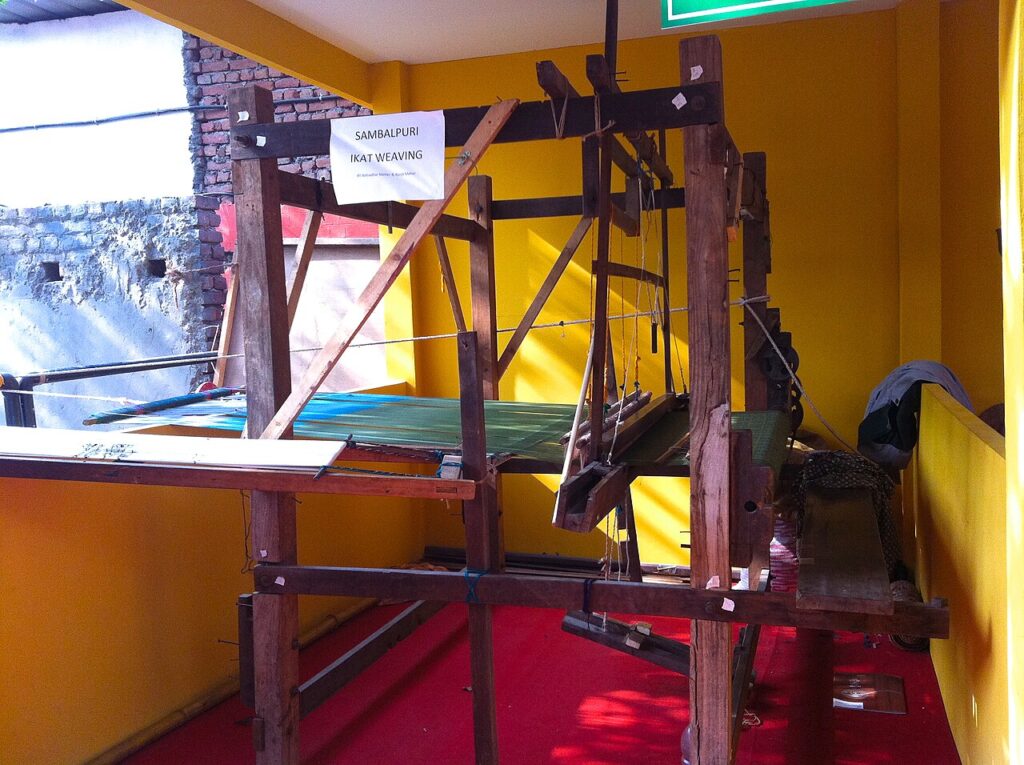
The creation of a Khandua silk saree begins long before the weaver sits at the loom. The technique employed is the traditional tie-dye Ikat method, locally known as bandha, which is one of the most complex and labor-intensive textile processes in the world. In this technique, the yarn is first tied tightly at specific intervals using cotton threads before it is dyed. These tied portions resist the dye, creating patterns on the yarn itself. The process requires extraordinary precision because the weaver must calculate exactly where each knot should be placed so that when the dyed yarn is woven on the loom, the patterns align perfectly to form coherent motifs and designs. A single Khandua saree may require multiple rounds of tying and dyeing, depending on the complexity of the design and the number of colors used. The warp and weft threads are dyed separately, and when they intersect on the loom, they create the signature Ikat patterns that are slightly fuzzy at the edges, giving Khandua sarees their distinctive organic and handcrafted appearance that machine-made textiles can never replicate.
The Famous Khandua Bandha Design and Its Visual Language
The Khandua bandha design is instantly recognizable and has become synonymous with Odia textile heritage. The most iconic design element is the traditional temple motif border that runs along the length of the saree, creating a frame of architectural beauty that echoes the magnificent temples of Odisha. Within the body of the saree, weavers create intricate geometric patterns, floral designs, and figurative motifs that tell stories of mythology, nature, and daily life. One of the most celebrated traditional designs is the kumbha or temple pitcher motif, which symbolizes prosperity and auspiciousness. Another distinctive pattern is the buta or boota design, where small motifs are scattered across the fabric in a rhythmic arrangement that creates a sense of movement and visual harmony. The pallu or aanchal of the Khandua saree is often the most elaborately decorated section, featuring larger motifs, more complex patterns, and sometimes narrative scenes from religious texts. The mathematical precision required to calculate these patterns before the tying process begins is astounding, and master weavers in Nuapatna are known to carry complex design formulas in their memory, passed down through oral traditions within weaving families.
Temple Motifs and the Divine Connection to Lord Jagannath
The religious significance of Khandua silk sarees cannot be overstated, as they share an inseparable bond with the revered Jagannath Temple in Puri, one of the four sacred Char Dham pilgrimage sites in Hinduism. For centuries, Khandua sarees have been used as ritual offerings to Lord Jagannath, Lord Balabhadra, and Goddess Subhadra. The traditional Khandua silk fabric known as Gita Govinda Khandua is perhaps the most sacred of all, as it features verses from the Gita Govinda composed by the twelfth-century poet Jayadeva, woven directly into the fabric using the bandha technique. These sacred textiles are draped on the deities during various rituals and festivals, particularly during the famous Rath Yatra when the deities are taken out in grand procession. The temple motifs woven into Khandua sarees are not merely decorative elements but are deeply symbolic representations of Odia temple architecture, featuring elements like the kalasha or sacred pot, the konark wheel, and the towering gopuram or temple spire. Each motif carries spiritual meaning, and weavers believe that weaving these sacred designs is itself an act of devotion and worship. The tradition of offering Khandua silk to Lord Jagannath has elevated this textile from a mere craft product to a sacred artifact, giving it a status that few other textiles in India can claim.
The Distinctive Red and Natural Color Palette
The color palette of traditional Khandua silk sarees is dominated by deep, rich reds that hold profound cultural and religious significance in Odia tradition. Red is considered the most auspicious color in Hindu culture, symbolizing fertility, prosperity, marital bliss, and divine energy. The traditional Khandua saree is typically woven with a brilliant red background, often referred to as kusum red or padma red, named after the flowers whose hues the weavers seek to replicate. Alongside red, natural and earthy tones form the secondary palette, including deep yellows, burnt oranges, rich browns, and occasional touches of green and indigo. Historically, all colors used in Khandua sarees were derived from natural sources. Red was extracted from the roots of the al tree or from lac, yellow from turmeric and pomegranate rind, black from iron rust and tamarind seeds, and green from a mixture of yellow and indigo. While modern market demands have led some weavers to adopt chemical dyes for faster production and color consistency, the master weavers of Nuapatna still preserve the knowledge of natural dyeing techniques, and there is a growing revival of interest in naturally dyed Khandua sarees among discerning buyers who appreciate their organic beauty, environmental sustainability, and the depth of color that natural dyes impart to silk.
The Nuapatna Weaving Cluster and Its Historical Legacy
Nuapatna, a small village in the Gopinathpur block of Cuttack district, is the heartland of Khandua silk weaving and has earned a legendary reputation in the world of handloom textiles. The village is home to hundreds of weaving families who have practiced this craft for generations, with many families able to trace their weaving lineage back seven to eight generations or more. The entire ecosystem of Nuapatna is organized around the craft of weaving, with every household containing at least one loom and every member of the family contributing to some aspect of the production process. Children grow up watching their parents and grandparents work at the loom, learning the rhythms and techniques of weaving almost by osmosis. The village has produced master weavers whose names have become legendary in textile circles, artisans who have received national awards and recognition for their extraordinary skill and contribution to preserving this heritage craft. The geographical location of Nuapatna, situated near the banks of the Mahanadi River and in close proximity to both Cuttack and Bhubaneswar, has historically provided weavers with access to markets, raw materials, and patronage from temples and royal courts, all of which have contributed to the flourishing of the Khandua tradition in this specific location.
Geographical Indication Tag and Recognition
The Khandua silk saree from Nuapatna has been awarded the Geographical Indication tag, a prestigious recognition that acknowledges the unique geographical origin and distinctive qualities of this textile. The GI tag provides legal protection to the weavers and the Nuapatna cluster, preventing unauthorized use of the Khandua name by producers outside the region who might attempt to replicate the design using inferior materials or mechanical processes. This recognition has been instrumental in raising the profile of Khandua sarees in national and international markets, helping consumers identify authentic products and ensuring that the economic benefits of this heritage craft flow back to the genuine artisans of Nuapatna. The GI tag also serves as a certificate of authenticity, assuring buyers that the saree they are purchasing has been crafted using traditional methods in the traditional geographical area, maintaining the integrity of the craft that has been perfected over centuries. This official recognition has opened new doors for Khandua weavers, enabling them to participate in prestigious textile exhibitions, access government support programs, and command better prices for their labor-intensive creations in the marketplace.
Economic Importance and Livelihood for Weavers
The Khandua silk weaving tradition is the primary source of livelihood for thousands of families in and around Nuapatna, making it an economic pillar of the local community. The craft provides direct and indirect employment to a vast network of people, including weavers, dyers, yarn preparers, designers, loom mechanics, and traders. Despite the economic significance of this craft, Khandua weavers face numerous challenges that threaten their livelihoods and the sustainability of the tradition. The rising cost of raw silk, competition from power loom imitations that mimic Khandua designs at a fraction of the cost, fluctuating market demand, and the availability of cheaper alternative fabrics have all put pressure on handloom weavers. Many weavers operate in a cycle of debt, borrowing money from middlemen or master weavers to purchase raw materials and then selling their finished sarees at prices that barely cover their production costs and debt obligations. However, there are positive developments as well. The growing appreciation for handloom products among urban consumers, the rise of ethical fashion movements, direct-to-consumer selling through online platforms, and government initiatives supporting handloom sectors have created new opportunities for Khandua weavers to earn fair wages and achieve economic stability. Cooperative societies and self-help groups in Nuapatna have been instrumental in eliminating exploitative middlemen and ensuring that a larger share of the retail price reaches the actual weavers.
Preserving a Living Legacy for Future Generations
The future of Khandua silk sarees stands at a critical crossroads where the forces of modernization and the imperatives of heritage preservation must find a delicate balance. While the younger generation of weaving families in Nuapatna is increasingly drawn to alternative careers and urban opportunities, there remains a core group of young weavers who are choosing to carry forward the family tradition, often bringing with them fresh perspectives, design innovations, and entrepreneurial energy. These young artisans are experimenting with contemporary color combinations, adapting traditional motifs for modern saree draping styles, and leveraging digital platforms to reach wider audiences without compromising the fundamental techniques and spiritual essence of the craft. The survival of Khandua weaving ultimately depends on creating an ecosystem where traditional artisans can earn dignified livelihoods, where consumers understand and value the extraordinary skill and labor behind each handmade saree, and where institutional support systems empower weavers rather than exploit them. As long as the looms of Nuapatna continue to sing their ancient songs, as long as the sacred threads of Khandua silk continue to carry the prayers and artistry of their makers, this magnificent heritage will endure, weaving together the past, present, and future of Odia culture into a fabric that is both timeless and urgently relevant in our contemporary world.