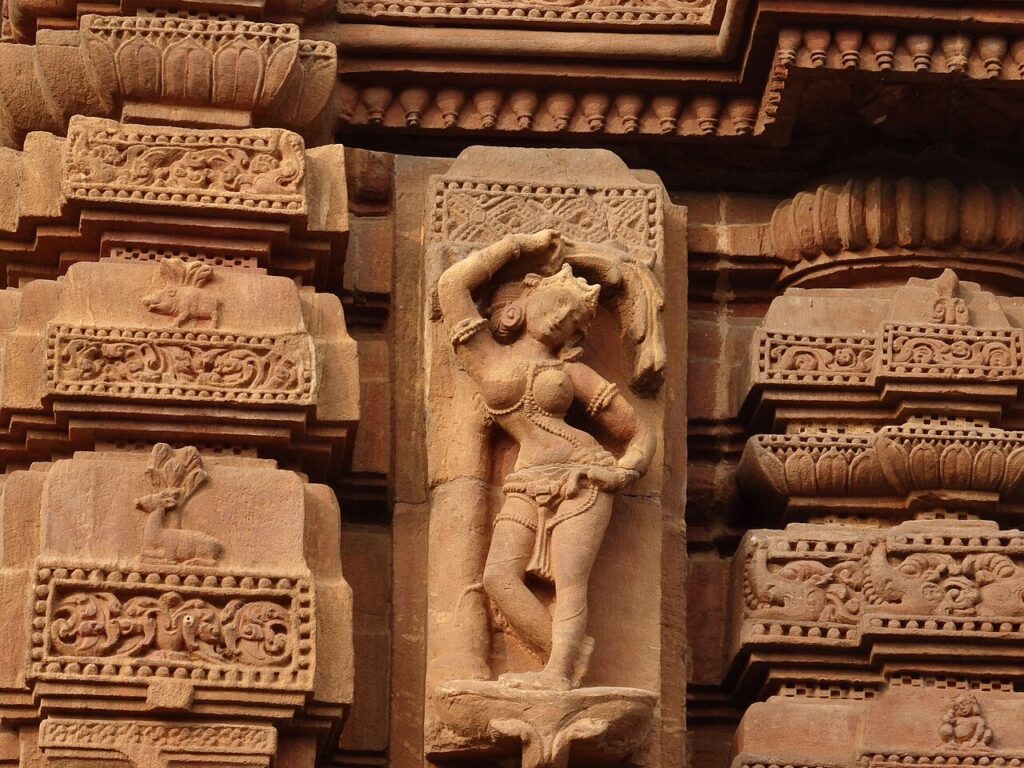
କଳିଙ୍ଗ ସ୍ଥାପତ୍ୟ: ଓଡ଼ିଶାର ମନ୍ଦିର ନିର୍ମାଣ ପରମ୍ପରା
ଭାରତୀୟ ସ୍ଥାପତ୍ୟର ତିନି ମହାନ ଶୈଳୀ ମଧ���ୟରୁ ଏକ — କଳିଙ୍ଗ ସ୍ଥାପତ୍ୟ — ଓଡ଼ିଶାର ନିଜସ୍ୱ ଦାନ। ଖ୍ରୀଷ୍ଟ ପରବର୍ତ୍ତୀ ଷଷ୍ଠ ଶତାବ୍ଦୀରୁ ତ୍ରୟୋଦଶ ଶତାବ୍ଦୀ ପର୍ଯ୍ୟନ୍ତ ଏହି ପରମ୍ପରା ବିକଶିତ ହୋଇଛି ଏବଂ ଆଜି ମଧ୍ୟ ଜୀବିତ।
ମୁଖ୍ୟ ଅଂଶ
କଳିଙ୍ଗ ମନ୍ଦିରର ଦୁଇ ମୁଖ୍ୟ ଅଂଶ — ଦେଉଳ (ଗର୍ଭଗୃହ-ଶିଖର ସହ ମୁଖ୍ୟ ମନ୍ଦିର) ଏବଂ ଜଗମୋହନ (ପ୍ରବେଶ-ମଣ୍ଡପ)। ବଡ଼ ମନ୍ଦିରରେ ଏଥିସହ ଯୋଡ଼ା ଯାଏ ନାଟ୍ୟମଣ୍ଡପ (ନୃତ୍ୟ-ହଲ) ଓ ଭୋଗମଣ୍ଡପ (ଭୋଗ-ହଲ)। ଶିଖର ଶୈଳୀ ଅନୁସାରେ ତିନି ପ୍ରକାର ଦେଉଳ:
- ରେଖା ଦେଉଳ: ବକ୍ର ରେଖାର ଶିଖର — ଲିଙ୍ଗରାଜ, ଜଗନ୍ନାଥ ମନ୍ଦିର ଉଦାହରଣ।
- ପିଢ଼ା ଦେଉଳ: ସୋପାନକୃତ ଶିଖର — ଜଗମୋହନରେ ସାଧାରଣ।
- ଖଖରା ଦେଉଳ: ଅଣ୍ଡାକୃତି ଛାତ ଶୈଳୀ — ବୌଦ୍ଧ/ଶାକ୍ତ ଉପାସନା ପୀଠରେ।
ବିକାଶର ସୋପାନ
ଷଷ୍ଠ ଶତାବ୍ଦୀର ପରଶୁରାମେଶ୍ୱରଠାରୁ ଆରମ୍ଭ କରି ଦଶମ ଶତାବ୍ଦୀର ମୁକ୍ତେଶ୍ୱର (ଏହାର ତୋରଣ ଓ ନାଗସ୍ତମ୍ଭ ପାଇଁ ପ୍ରସିଦ୍ଧ — ପ୍ରସଙ୍ଗ ଦେଖନ୍ତୁ), ଏକାଦଶ ଶତାବ୍ଦୀର ଲିଙ୍ଗରାଜ ଓ ରାଜାରାଣୀ (ରାଜାରାଣୀ ପ୍ରସଙ୍ଗ), ଏବଂ ତ୍ରୟୋଦଶ ଶତାବ୍ଦୀର କୋଣାର୍କ ସୂର୍ଯ୍ୟ ମନ୍ଦିର (ଅଲଗା ଲେଖା) — ଏହି କ୍ରମରେ ଶୈଳୀ ପୂର୍ଣ୍ଣତା ପାଇଛି। ଭୁବନେଶ୍ୱରରେ ମାତ୍ର କିଛି ବର୍ଗକିଲୋମିଟର ଭିତରେ ଶହ ଶହ ମନ୍ଦିର — ତେଣୁ ଏହା “ମନ୍ଦିର ନଗରୀ” (ପ୍ରସଙ୍ଗ)।
କୌଶଳ
ଖୋଦେଇ ପାଇଁ ସ୍ଥାନୀୟ ଖୋଣ୍ଡାଲାଇଟ୍ ଓ ଲାଟେରାଇଟ୍ ପଥର ବ୍ୟବହାର ହୁଏ; ଶିଳ୍ପୀମାନେ ଖଣ୍ଡ ଖଣ୍ଡ ପଥର ଖୋଦେଇ ପରେ ସେଗୁଡ଼ିକୁ ବିନା ଗାରରେ ଖପୁରି କରନ୍ତି (dry masonry with iron dowels)।
Kalinga Architecture: Odisha’s Temple-Building Tradition
One of the three great styles of Indian temple architecture, Kalinga flourished in Odisha from roughly the 6th to the 13th century CE and survives in living worship today. Its grammar is so distinctive that a single glance separates an Odia temple from Nagara or Dravida cousins.
Anatomy of a Kalinga temple
The two core units are the deula — the sanctum with its towering spire — and the jagamohana, the assembly hall in front of it. Larger complexes add a natamandapa (dance hall) and bhogamandapa (offering hall), as at Lingaraj and Jagannath Temple, Puri. Three deula sub-styles are recognised:
- Rekha deula — curvilinear spire over the sanctum (Lingaraj, Jagannath).
- Pidha deula — pyramidal tiered roof, usual for mandapas.
- Khakhara deul — barrel-vaulted roof, favoured for Shakta shrines like Vaital Deula, Bhubaneswar.
Evolution in seven centuries
| Era | Landmark | Innovation |
|---|---|---|
| c. 650 CE | Parashurameshvar | Earliest fully-formed Kalinga temple |
| c. 950 CE | Mukteshvar | Torana arch, sculptural refinement — “gem of Odisha” |
| c. 1050–1100 | Rajarani, Lingaraj | Full pancharatha plan, height ~45–55 m |
| c. 1250 | Konark Sun Temple | Chariot form with 24 wheels — apex of the tradition |
Bhubaneswar alone conserves hundreds of temples from every phase — the reason it is called the Temple City (our guide). The classic building material is khondalite, a local garnetiferous gneiss, dressed as interlocking blocks in dry masonry pinned with iron dowels and cramps.