ସମ୍ବଲପୁରୀ ଶାଢ଼ୀ: ବନ୍ଧା କଳାର ଉତ୍ତରାଧିକାର
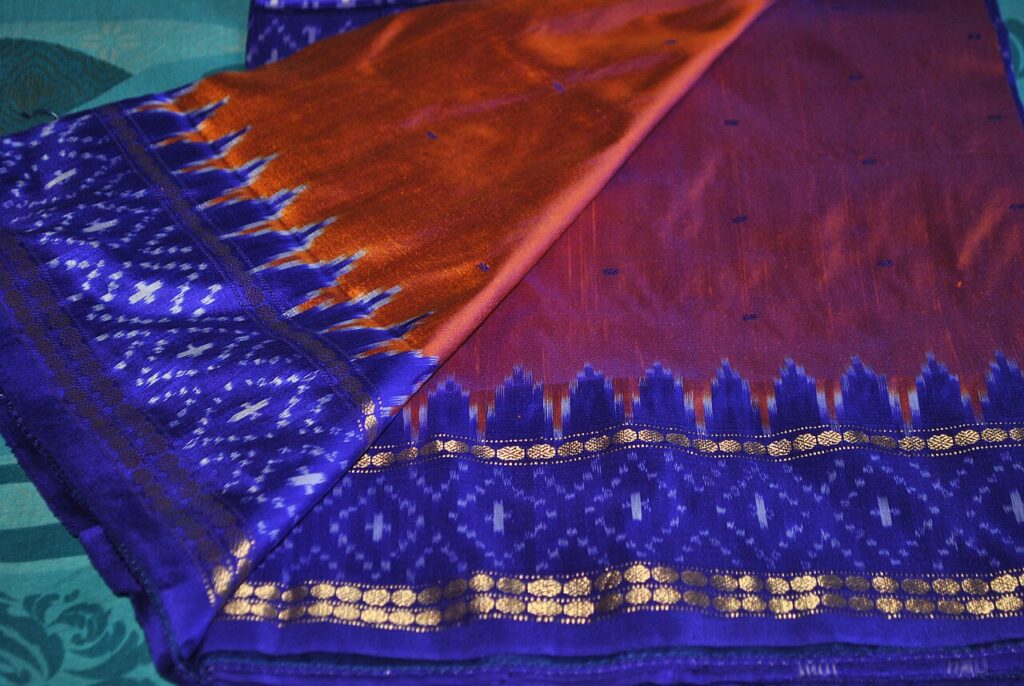
ପଶ୍ଚିମ ଓଡ଼ିଶାର ତନ୍ତିଆଳିରୁ ବାହାରିଥିବା ସମ୍ବଲପୁରୀ ଶାଢ଼ୀ ଆଜି କେବଳ ଏକ ବସ୍ତ୍ର ନୁହେଁ — ଏହା ଓଡ଼ିଶାର ହସ୍ତତନ୍ତ ପରିଚୟ। ଏହାର ମୂଳ କୌଶଳ ବନ୍ଧା (ikat) — ଯେଉଁଠି ସୂତା ପ୍ରଥମେ ଡିଜାଇନ୍ ଅନୁସାରେ ବାନ୍ଧି ହୋଇ ରଙ୍ଗାଯାଏ, ତାପରେ ବୁଣାଯାଏ, ଫଳରେ କାପଡ଼ାରେ ଫୁଟି ଉଠେ ଝାପସି ଧାରର ନକ୍ସା।
ଏହି କଳାର କେନ୍ଦ୍ର ଭୂମି ବରଗଡ଼ ଅଞ୍ଚଳ — ବିଶେଷକରି ବିଜେପୁର, ସୋନପୁର ଓ ବାଉଦା। ହଜାର ହଜାର ତନ୍ତି ପରିବାର ଏହି କଳାକୁ ଜୀବିକା ଭାବରେ ଆପଣାଇଛନ୍ତି ଏବଂ ପୁରୁଷାନୁକ୍ରମେ ବଢ଼ାଉଛନ୍ତି।
ବୈଶିଷ୍ଟ୍ୟ
- ବନ୍ଧା କୌଶଳ: ପ୍ରଥମେ ସୂତା ବାନ୍ଧି ରଙ୍ଗାଯାଏ, ତାପରେ ବୁଣାଯାଏ — ଗୋଟିଏ ଶାଢ଼ୀ ପାଇଁ ଦୁଇ ସପ୍ତାହରୁ ଛଅ ମାସ ପର୍ଯ୍ୟନ୍ତ ସମୟ ଲାଗେ।
- ମୋଟିଫ୍: ଶଂଖ, ଚକ୍ର, ଫୁଲ, ମାଛ, କଇଁଛ — ପ୍ରକୃତି ଓ ଜଗନ୍ନାଥ ସଂସ୍କୃତିର ପ୍ରତୀକ।
- ଉପାଦାନ: ରେଶମ ଓ ସୁତା; ଆଧୁନିକ କାଳରେ ମର୍ସରାଇଜଡ୍ କପା ମଧ୍ୟ।
ସମ୍ବଲପୁରୀ ଶାଢ଼ୀର ଅନୁରୂପ କଳା ଅନ୍ୟଠାରେ ମଧ୍ୟ — ନୁଆପାଟନାର ଖଣ୍ଡୁଆ ରେଶମ ଓ କଟକର ତାରକାସି କଳା ପ୍ରସଙ୍ଗରେ ଆମେ ଆଲୋଚନା କରିଛେ।
Sambalpuri Saree: The Heritage of Bandha Art
The Sambalpuri saree from western Odisha is India’s most celebrated handloom ikat. Its designs are not printed or embroidered — they are woven into the very threads through the bandha (ikat) resist-dye technique, where yarn is tie-dyed to the final pattern before weaving begins. Sambalpuri fabrics carry the Geographical Indication (GI) tag, and the weave found national fame when public figures — most famously Prime Minister Indira Gandhi — wore it, turning a regional craft into a national emblem.
How bandha works
Weavers tie bundles of yarn according to a mirrored design, dye them in stages, and only then mount them on the loom. As warp and weft interlace, the pattern emerges with ikat’s characteristic feathered edge. A single saree takes from two weeks to six months depending on complexity; double-ikat Bichitrapuri and Bapta designs demand the greatest skill. Chief production clusters: Bargarh (Bijepur), Sonepur, Boudh and Sambalpur.
Motifs and meaning
| Motif | Meaning |
|---|---|
| Shankha, chakra, padma | Jagannath triad auspiciousness |
| Fish, turtle | Fertility and prosperity |
| Deula (temple) | Kalinga shrine silhouettes — see our architecture guide |
Sambalpuri weaving sits inside a wider craft ecosystem: the Khandua silk of Nuapatna, Cuttack’s silver filigree (tarakasi), and Pipli’s appliqué together map Odisha’s GI-registered crafts — see our Pipli appliqué piece.