In English
The Buddhist Legacy of Odisha: Tracing the Sacred Footprints of the Diamond Triangle
Odisha, historically known as Kalinga, Utkala, and Odra, occupies a profoundly significant place in the annals of Indian Buddhism. While the world associates Buddhist heritage primarily with Bodh Gaya, Sarnath, and Kushinagar, Odisha silently harbors some of the most spectacular and archaeologically rich Buddhist sites in all of South Asia. The region served as a vibrant cradle for Buddhist thought, practice, and artistic expression for over a millennium, nurturing multiple schools of Buddhism including Hinayana, Mahayana, Vajrayana, and Kalachakrayana. The cluster of three magnificent sites — Lalitgiri, Ratnagiri, and Udayagiri — collectively referred to as the Diamond Triangle of Odisha, along with the ancient site of Dhauleshwar or Dhauli at the outskirts of modern Bhubaneswar, represents an unbroken continuum of Buddhist civilization from the third century BCE to the twelfth century CE. These sites, nestled in the verdant laterite hills of the coastal belt, reveal a narrative of imperial patronage, monastic excellence, maritime trade, and philosophical evolution that fundamentally reshaped our understanding of Buddhism’s eastern Indian trajectory.
Ashoka and the Transformation of Kalinga: The Dhauli Connection
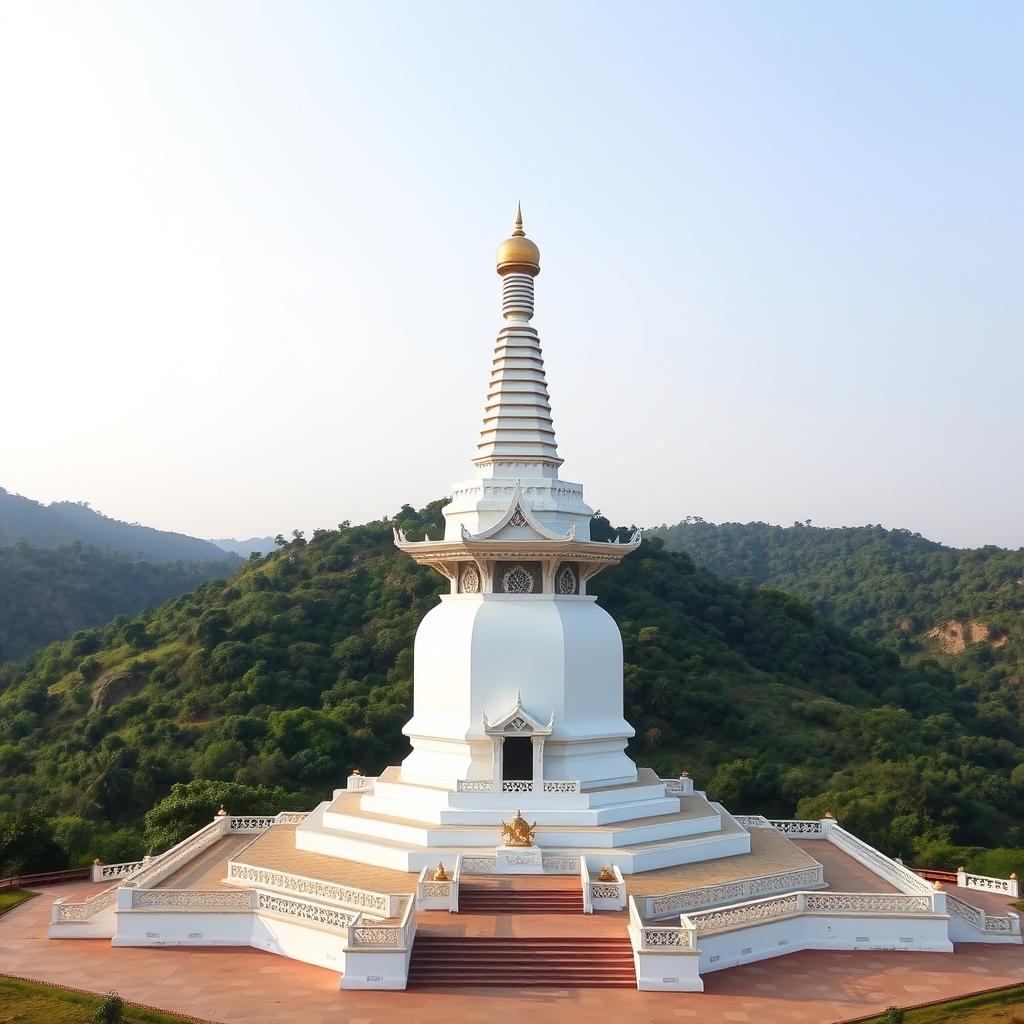
The story of Buddhism in Odisha is inseparable from the cataclysmic Kalinga War of 261 BCE. Emperor Ashoka of the Mauryan dynasty launched a massive military campaign against the independent and prosperous kingdom of Kalinga, resulting in unprecedented bloodshed. According to Ashoka’s own thirteenth rock edict, more than one hundred thousand people were killed, and one hundred fifty thousand were deported, while many more died from disease and famine. The sheer scale of human suffering profoundly shattered the emperor, triggering one of history’s most remarkable personal transformations. Ashoka renounced armed conquest and embraced the Dhamma, the Buddhist path of non-violence, compassion, and righteous living. It was at Dhauli, located on the southern bank of the river Daya just eight kilometers from Bhubaneswar, that this transformation crystallized into monumental expression. The Dhauli hills bear a set of rock edicts carved by Ashoka’s command, inscribed in Prakrit using the Brahmi script, exhorting his subjects and administrators to live morally, respect all faiths, and practice welfare governance. These edicts are among the earliest written declarations of state policy based on ethical principles anywhere in the world. Dhauli also features the celebrated Shanti Stupa, or Peace Pagoda, built in the 1970s through the collaboration of the Japan Buddha Sangha and the Kalinga Nippon Buddha Sangha. Perched atop the Dhauli hill, the dazzling white domed structure overlooks the verdant plains where the ancient battle was fought, serving as a powerful modern symbol of peace rising from the ashes of war. The site also contains ancient rock-cut caves, water cisterns, and the remains of a stupa that likely dates to the Ashokan period, making Dhauli the foundational starting point of Odisha’s Buddhist journey.
Lalitgiri: The Oldest Monastic Citadel of the Diamond Triangle
Situated in the Mahanga tehsil of Cuttack district, approximately ninety kilometers from Bhubaneswar, Lalitgiri stands as the earliest among the Diamond Triangle sites, with archaeological evidence pointing to continuous occupation from the first century CE to the seventh or eighth century CE, though its origins may trace back even further. Excavations at Lalitgiri, conducted systematically between 1985 and 1992 by the Archaeological Survey of India, unveiled a sprawling monastic complex that includes a massive brick stupa, two monasteries, a prayer hall, numerous votive stupas, and an extensive reliquary chamber. The main stupa, constructed in stages over centuries, represents a fascinating architectural evolution. Its core dates to the early historical period, possibly contemporaneous with the Kushan era, while successive enlargements reflect the growing prosperity and importance of the site. The most sensational discovery at Lalitgiri came in 1985 when archaeologists unearthed a relic casket from the core of the main stupa. Inside a steatite casket nested within a khondalite container, they found a fragmentary bone relic, gold ornaments, and silver flowers — findings strongly suggesting that these were actual corporeal relics of the Buddha or a revered Buddhist master. This discovery elevated Lalitgiri to the status of a major pilgrimage site, placing it alongside Sanchi and Kapilavastu in terms of relic significance. The monasteries at Lalitgiri follow the typical quadrangular layout with a central courtyard, cells for monks along the walls, a shrine chamber containing a Buddha image, and an elaborate entrance gateway. The site has yielded hundreds of stunning sculptural pieces, including standing and seated Buddha images in the Amaravati and Gupta artistic traditions, Bodhisattva figures, and Jataka tale panels. Notably, Lalitgiri also contains a U-shaped hill with rock-cut chambers that may have served as early meditation retreats for monks seeking solitude, drawing a direct parallel to the Barabar and Nagarjuni caves of Bihar associated with the Mauryan period.
Ratnagiri: The Crown Jewel of Vajrayana Buddhism
If Lalitgiri represents the early foundational phase, Ratnagiri embodies the glorious mature period of Buddhist scholarship and esoteric practice in Odisha. Located in the Brahmagiri block of Jajpur district, approximately one hundred kilometers from Bhubaneswar, Ratnagiri was excavated between 1958 and 1961 under the direction of the legendary archaeologist Debala Mitra. The excavations revealed a site of staggering richness and sophistication, leading scholars to often describe Ratnagiri as the premier Buddhist establishment of eastern India, rivaling even Nalanda in certain respects. Ratnagiri flourished primarily between the fifth century and the thirteenth century CE, with its peak period coinciding with the rule of the Bhauma-Kara and Somavamsi dynasties, who were enthusiastic patrons of Buddhism. The site comprises two large monasteries, a massive stupa, numerous votive stupas, a beautifully carved stone well, and thousands of sculptural fragments scattered across the hilltop. The larger monastery, Monastery 1, is an imposing structure with a central shrine, twenty-four cells for resident monks, an ornate entrance, and a beautifully paved courtyard. The sheer density of sculptural decoration at Ratnagiri is breathtaking. Every pillar, doorframe, wall surface, and niche seems to have been adorned with exquisitely carved images of the Buddha, Bodhisattvas, Tara, Aparajita, Kurukulla, Heruka, and other deities of the Vajrayana pantheon. Ratnagiri is particularly renowned for its massive stone images of Tara in various forms, reflecting the central role of Tara worship in the Vajrayana tradition that flourished here. The site yielded an extraordinary collection of miniature stupas carved with scenes from the Buddha’s life, dharmachakra motifs, and tantric mandalas, suggesting that Ratnagiri was not merely a monastic residence but a major center of iconographic production and artistic training. Excavations also recovered seals and sealings inscribed with the name “Sri Ratnagiri Mahavihara,” confirming its identity as a recognized mahavihara — a great monastic university — of international repute. The library at Ratnagiri appears to have been extensive, as evidenced by the discovery of numerous terracotta and stone sealings that would have been used to authenticate manuscripts. The site’s strategic location, overlooking the rivers Brahmani and Birupa, connected it to active trade routes leading to the coast, explaining how Ratnagiri maintained links with Buddhist centers across South and Southeast Asia.
Udayagiri: The Largest and Most Extensive Complex
Located barely five kilometers from Ratnagiri in the same Jajpur district, Udayagiri forms the third vertex of the Diamond Triangle. Excavated between 1985 and the 2000s by the ASI, Udayagiri proved to be the most extensive of the three sites, spread across a large laterite hill and its surrounding valleys. The site revealed two distinct monastic complexes — Udayagiri I and Udayagiri II — along with a massive stupa, several votive stupas, a brick chamber, and a wealth of sculptural and epigraphic material. Udayagiri’s period of occupation extends from at least the second century CE to the thirteenth century CE, making it the longest continuously inhabited site in the Diamond Triangle. The monasteries at Udayagiri are architecturally sophisticated, featuring multiple courtyards, elaborate drainage systems, shrine chambers with exquisitely carved doorframes, and residential cells that could have housed dozens of monks. One of the most remarkable discoveries at Udayagiri was a brick-built chamber containing a large number of votive stupas arranged in a deliberate pattern, possibly representing a ceremonial space for specific ritual practices. The sculptural assemblage from Udayagiri is extraordinarily rich and diverse, including Buddha images in various mudras, elaborate panels depicting scenes from the Jataka tales, Bodhisattva figures of remarkable elegance, and a large number of tantric deities that testify to the practice of Vajrayana Buddhism at the site. Stone inscriptions recovered from Udayagiri mention the names of several mahaviharas and individual monks, providing valuable historical data about the monastic administration and the patronage networks that sustained these institutions. Notably, the inscriptions refer to kings of the Bhauma-Kara dynasty, particularly those who bore Buddhist names, confirming the close relationship between the ruling house and the Buddhist establishment. The site also contains evidence of a flourishing Buddhist village community that supported the monasteries through donations of land, produce, and labor, painting a picture of an integrated religious ecosystem rather than isolated monastic enclaves.
Archaeological Discoveries and the Unfolding Narrative
The cumulative archaeological work across the Diamond Triangle has fundamentally transformed scholarly understanding of Buddhism in eastern India. Prior to these excavations, the region was largely overlooked in academic narratives that focused on the Gangetic plain. The discovery of relic caskets at Lalitgiri, the identification of Ratnagiri as a major mahavihara through its inscribed sealings, and the unearthing of Udayagiri’s vast monastic footprint have established beyond doubt that Odisha was a major center of Buddhist learning, art, and practice for over a thousand years. The excavations revealed a clear evolutionary sequence: from early Hinayana practices represented by simple stupas and aniconic symbolism, through the transitional period when Buddha images first appeared, to the mature Mahayana phase with its elaborate Bodhisattva cult, and finally to the esoteric Vajrayana and Kalachakrayana traditions that dominated the later centuries. This complete stratigraphic record is rare and immensely valuable. The artistic output of the Diamond Triangle is distinctive, characterized by a unique blend of Gupta aesthetic refinement with local Odishan sensibilities, resulting in a school of Buddhist art that is both classical and regional. The prolific production of stone sculptures, terracotta plaques, bronze images, and miniature votive stupas suggests a highly organized workshop system with master artisans training generations of craftsmen. The discovery of numerous seals, sealings, and inscribed potsherds has provided a rich epigraphic corpus that helps date the different phases of occupation, identify royal patrons, and reconstruct the administrative structure of the monasteries.
Significance in the Buddhist Circuit and Tourism Landscape
The Diamond Triangle holds immense significance in the contemporary Buddhist circuit tourism framework. For Buddhist communities across Asia — particularly in Sri Lanka, Thailand, Myanmar, Japan, Korea, China, Tibet, and the Himalayan regions — these sites represent a sacred heritage that connects them to the early spread of the Dhamma. The presence of actual relic caskets at Lalitgiri makes it a potential destination for relic veneration, a practice central to Theravada Buddhist piety. For Vajrayana practitioners, particularly those from Tibet, Bhutan, and the Himalayan belt, Ratnagiri and Udayagiri are of special interest because they preserve some of the earliest archaeological evidence of tantric Buddhist practice, including images of deities that remain central to Tibetan Buddhist ritual. The Odisha government, recognizing this potential, has developed the Diamond Triangle as a flagship tourism product, connecting it with the larger Buddhist circuit that includes Bodh Gaya, Sarnath, and Kushinagar. Infrastructure improvements including paved roads, interpretation centers, site museums, and wayfinding signage have made the sites increasingly accessible. The site museums at Lalitgiri and Ratnagiri house stunning collections of excavated artifacts that provide visitors with a comprehensive understanding of the artistic and philosophical world of these monasteries. International Buddhist conferences, cultural festivals, and scholarly seminars regularly draw attention to these sites, gradually elevating their profile on the global heritage map. The potential for heritage tourism to drive local economic development in the relatively underdeveloped Jajpur and Cuttack hinterlands is substantial, creating opportunities for community-based tourism, handicraft revival, and cultural exchange programs.
How to Visit the Diamond Triangle
Visiting the Diamond Triangle requires some planning but is deeply rewarding. Bhubaneswar, the capital city of Odisha, serves as the ideal base, offering excellent air, rail, and road connectivity to the rest of India. Bhubaneswar’s Biju Patnaik International Airport is well-connected to major Indian metros, and the city’s railway station is a major junction on the East Coast Railway network. Dhauli, being just eight kilometers from Bhubaneswar, can easily be visited as a half-day excursion by taxi or auto-rickshaw. The Shanti Stupa, the rock edicts, and the surrounding landscape make for a contemplative morning or evening visit. For the Diamond Triangle proper, a full-day road trip from Bhubaneswar is the standard approach. The most efficient itinerary involves leaving Bhubaneswar early in the morning, driving approximately ninety kilometers northwest to Lalitgiri first, then proceeding to Ratnagiri about thirty-five kilometers further, and finally visiting Udayagiri just five kilometers from Ratnagiri before returning to Bhubaneswar by evening. The total driving distance for the circuit is roughly two hundred kilometers. Private taxis can be hired from Bhubaneswar for the day, and several travel operators offer organized Buddhist heritage tours. The best time to visit is between October and March when the weather is pleasant, with winter mornings offering particularly beautiful light for photography at the hilltop sites. Each site has a nominal entry fee maintained by the Archaeological Survey of India, and the site museums at Lalitgiri and Ratnagiri are open on all days except Fridays. Visitors should allocate at least one to two hours at each site to properly explore the excavated remains and study the museum collections. Comfortable walking shoes, sun protection, and drinking water are essential, as the sites involve walking over uneven terrain with limited shade. For those with deeper interest, spending two days allows for a more leisurely exploration, perhaps combining the Diamond Triangle visit with Dhauli on one day and the sites on the next, or incorporating a visit to the Odisha State Museum in Bhubaneswar which houses an excellent collection of Buddhist sculptures from across the state.