କଳିଙ୍ଗ ଯୁଦ୍ଧ: ଭାରତ ଇତିହାସର ଏକ ମୋଡ଼
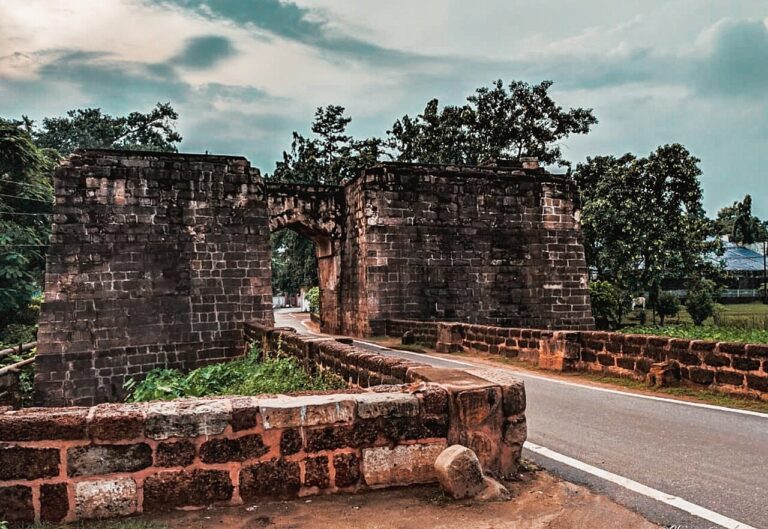
ଖ୍ରୀଷ୍ଟପୂର୍ବ ୨୬୧ ମସିହାରେ ମୌର୍ଯ୍ୟ ସମ୍ରାଟ ଅଶୋକ କଳିଙ୍ଗ (ଆଜିର ଓଡ଼ିଶା) ଆକ୍ରମଣ କରିଥିଲେ। ଦାୟା ନଦୀ ତଟରେ ଏହି ଯୁଦ୍ଧରେ ଲକ୍ଷ ଲକ୍ଷ ପ୍ରାଣ ନଷ୍ଟ ହେଲା — ଅଶୋକଙ୍କ ନିଜର ତ୍ରୟୋଦଶ ଶିଳାଲେଖା ଅନୁସାରେ ଦଶ ଲକ୍ଷ ଲୋକ ନିହତ ଓ ଅଧିକ ସଂଖ୍ୟକ ବନ୍ଦୀ ହେଲେ।
ପରିବର୍ତ୍ତନ
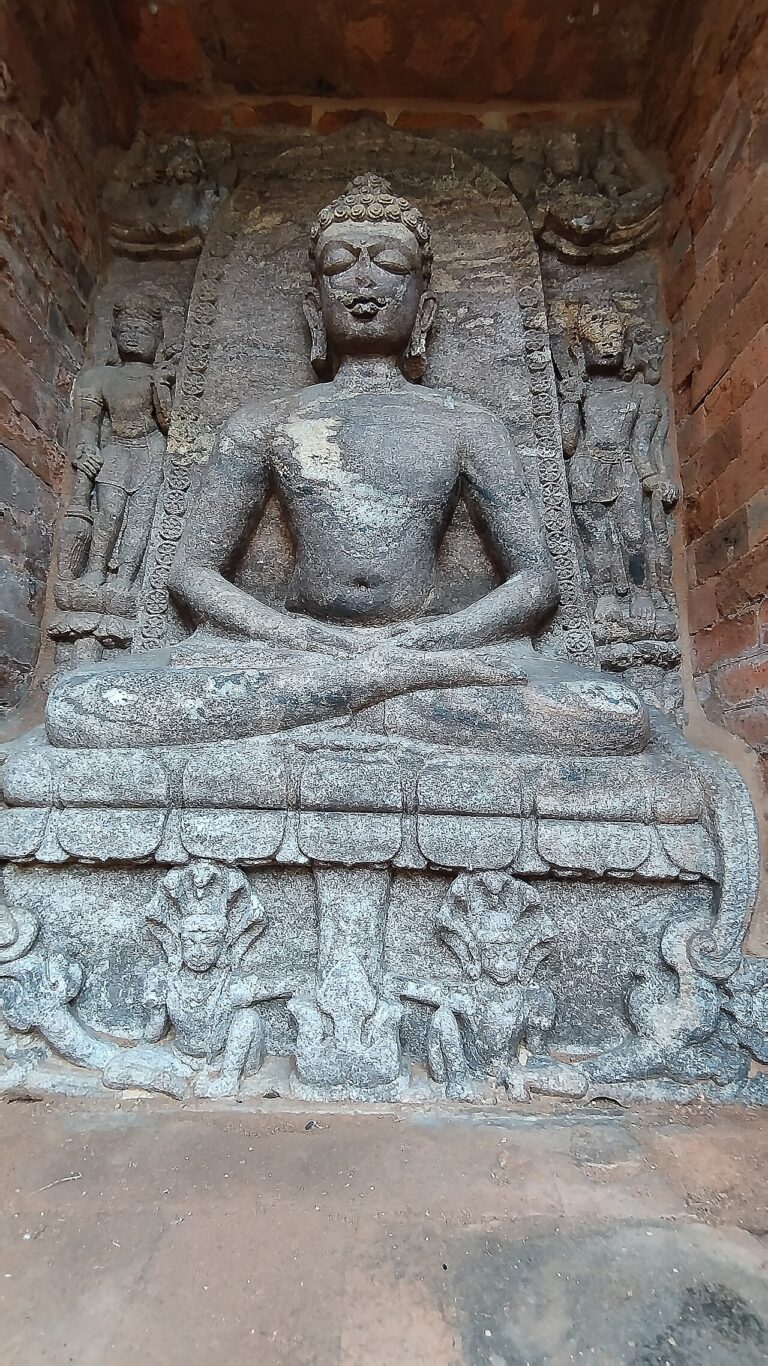
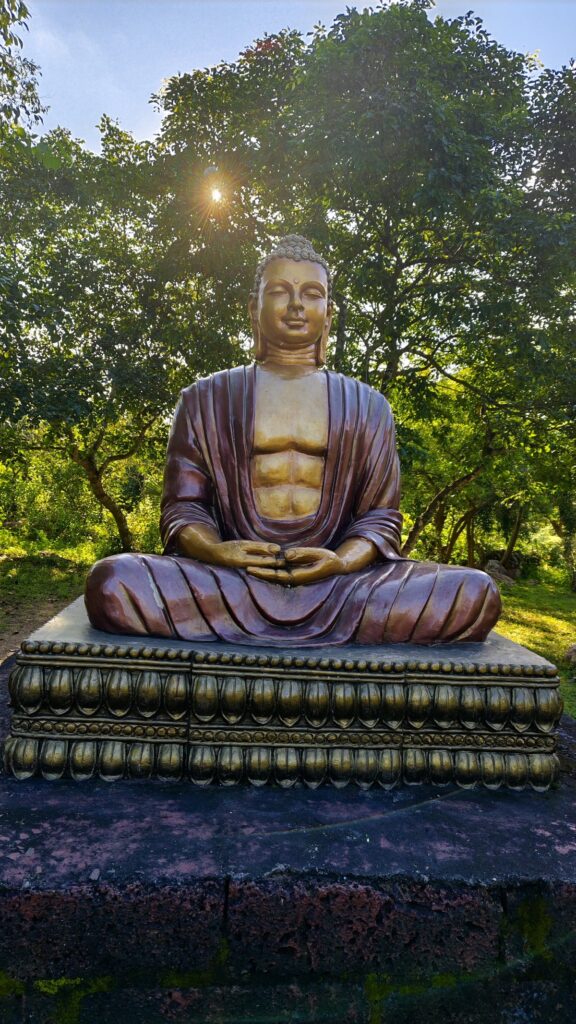
ଏହି ରକ୍ତପାତର ଦୃଶ୍ୟ ଅଶୋକଙ୍କ ହୃଦୟ ବଦଳାଇ ଦେଲା — ସେ ବୌଦ୍ଧ ଧର୍ମ ଗ୍ରହଣ କରିଲେ ଏବଂ “ଧର୍ମ ବିଜୟ”କୁ “ରଣ ବିଜୟ”ର ସ୍ଥାନ ଦେଲେ। ଏହି ଏକ ଘଟଣା ବୌଦ୍ଧ ଧର୍ମକୁ ଏସିଆ ଭରି ବିସ୍ତାର କଲା।
- ଯୁଦ୍ଧ ସ୍ଥଳ ନିକଟରେ ଆଜିର ଧୌଳି ଶାନ୍ତି ସ୍ତୂପ — ଜାପାନ-ଭାରତ ମିଳିତ ନିର୍ମାଣ।
- ଅଶୋକଙ୍କ ଶିଳାଲେଖା — “ଦେବାନାଂ ପିୟ” — ଧୌଳି ପାହାଡ଼ରେ ଆଜି ମଧ୍ୟ ଅଛି।
ଓଡ଼ିଶାର ବୌଦ୍ଧ ପରମ୍ପରା ଏହା ପରେ ବିକଶିତ ହୋଇ ରତ୍ନଗିରି-ଲଳିତଗିରି-ଉଦୟଗିରି ଭଳି ମହାକେନ୍ଦ୍ର ସୃଷ୍ଟି କଲା।
In English
The Dawn of Kalinga Temple Architecture: Introducing Parasurameshwar
Standing as a silent witness to over thirteen centuries of human history, the Parasurameshwar Temple in Bhubaneswar represents the very genesis of what the world has come to recognize as the Kalinga school of temple architecture. Nestled in the southern precincts of the ancient temple city, amidst later and grander edifices that rose in its wake, this modest yet profoundly significant structure holds the distinction of being the oldest surviving temple in Bhubaneswar. Built during the seventh century of the Common Era, the Parasurameshwar Temple is not merely a place of worship; it is a foundational text carved in stone, a primer that reveals the embryonic stages of an architectural vocabulary that would eventually produce masterpieces like the Lingaraja, the Jagannath Temple at Puri, and the Sun Temple at Konark. For anyone seeking to understand the evolutionary trajectory of Odishan temple architecture, the journey must inevitably begin here, at the feet of this ancient shrine dedicated to Lord Shiva in his form as Parasurama, the warrior-sage of Hindu mythology.
Historical Context: The Sailodbhava Patronage and Seventh-Century Bhubaneswar
The construction of the Parasurameshwar Temple is historically attributed to the Sailodbhava dynasty, a ruling house that held sway over the coastal and central regions of ancient Kalinga during the seventh and eighth centuries. The Sailodbhavas, who claimed descent from the mythical Saila dynasty, were among the earliest indigenous dynasties of Odisha to actively patronize temple construction on a significant scale. Their reign coincided with a period of remarkable cultural ferment in the region, when the abstract worship of Vedic traditions was being translated into tangible, monumental forms through the medium of stone architecture. Bhubaneswar, known in ancient inscriptions as Ekamra Kshetra—the sacred grove of the single mango tree—was already emerging as a major tirtha, a pilgrimage center of considerable repute. The Sailodbhava rulers, particularly those who bore the title of Madhavaraja, recognized the political and spiritual capital that temple-building could generate. By commissioning the Parasurameshwar Temple, they were not simply erecting a shrine; they were asserting their legitimacy as custodians of the sacred landscape and laying the architectural groundwork that subsequent dynasties—the Bhaumakaras, the Somavamsis, and the Gangas—would build upon with increasing sophistication and ambition. The temple thus serves as a chronological anchor, fixing the origins of the Bhubaneswar temple tradition to a specific historical moment with remarkable clarity.
Architectural Anatomy: The Early Kalinga Experiment
The architectural plan of the Parasurameshwar Temple reveals the formative phase of the Kalinga style, capturing a moment of transition and experimentation before the canonical norms were firmly established. The temple follows the basic pattern that would become standard across Odisha: a vimana, or rekha deul, serving as the sanctum sanctorum, preceded by a jagamohana, or pillared hall. However, unlike the towering, curvilinear spires of later Kalinga temples, the vimana of Parasurameshwar is comparatively squat and understated, rising to a modest height that nonetheless conveys a sense of contained spiritual energy. The jagamohana is a rectangular structure with a flat or gently sloping roof, a feature that distinguishes early Kalinga temples from their mature counterparts, where the jagamohana would acquire its own pyramidal superstructure. The temple is constructed using locally available sandstone, and the overall aesthetic is one of robust solidity tempered by an emerging delicacy of surface treatment. What is particularly noteworthy is the presence of a compound wall, a feature that suggests an early awareness of the concept of the temple as a sacred enclosure, a microcosm of the ordered universe set apart from the chaos of the profane world. The architectural elements—the bada, the Gandi, and the mastaka—are all present in nascent form, offering scholars a rare opportunity to study the proportional and stylistic choices that would later be codified into the classical Kalinga canon as described in the Silpa Prakasha and other treatises.
The Sculptural Program: A Stone Canvas of Mythological Narratives
If the architecture of Parasurameshwar represents the skeleton of early Kalinga temple design, then its sculptural embellishments constitute its flesh and blood, bringing the structure to life with an extraordinary profusion of mythological narratives and decorative motifs. The walls of the temple are densely carved, a practice that would become a hallmark of Odishan temple art, but here the carving bears a distinctive quality that sets it apart from later work. The figures are relatively smaller in scale, more densely packed, and possess a certain primitive vigor—an energy that is raw and unrefined yet deeply expressive. The sculptors of the Sailodbhava period were clearly working through the challenges of translating divine and human forms into stone, and their efforts reveal both a confident grasp of iconographic conventions and an endearing willingness to experiment with composition and posture. Among the most prominent sculptural themes are scenes from the Shaivite pantheon: Shiva in various manifestations, including his fearsome Bhairava form, the divine couple Shiva and Parvati in intimate domestic scenes, and the retinue of ganas, dwarf attendants who add a touch of earthy humor to the sacred narrative. The friezes also depict a variety of secular scenes—processions, dancers, musicians, and scenes of courtly life—that provide invaluable glimpses into the social and cultural fabric of seventh-century Odisha. These are not mere decorations; they are visual encyclopedias, preserving details of costume, jewelry, musical instruments, and everyday life that no textual source can adequately convey.
The Saptamatruka Panel: A Masterpiece of Shakta Iconography
Among the many sculptural treasures housed within the Parasurameshwar complex, the Saptamatruka panel deserves special attention as one of the finest early examples of Shakta iconography in eastern India. Located on the southern wall of the temple, this remarkable relief depicts the seven mother goddesses—Brahmi, Vaishnavi, Maheshvari, Kaumari, Varahi, Indrani, and Chamunda—each identified by her specific vahana, or mount, and her distinctive attributes. The panel is a revelation of early tantric influence in the religious life of Kalinga, demonstrating that Shakta worship was not a marginal or esoteric practice but was firmly integrated into the mainstream temple tradition from its very inception. Each goddess is carved with individualized features that reflect her unique character and cosmic function. Brahmi sits serenely atop her swan, Vaishnavi is flanked by Garuda, Maheshvari rides her bull, Kaumari is accompanied by her peacock, Varahi sits upon her boar, Indrani is mounted on her elephant, and Chamunda, the fiercest of the seven, is depicted with her characteristic emaciated form and garland of skulls. What makes this panel particularly significant is its compositional sophistication. Despite the crowded nature of the relief, each figure maintains her visual distinctiveness, and the overall arrangement conveys a sense of rhythmic harmony that speaks to the skill and aesthetic sensibility of the Sailodbhava-era sculptors. The presence of a diminutive figure of Shiva and Ganesha alongside the mothers further underscores the syncretic nature of early Kalinga religious practice, where Shaiva and Shakta traditions coexisted and complemented each other within the sacred precincts of a single temple.
Guardian Figures and Doorframe Detail: The Aesthetics of Protection
The entrance to the Parasurameshwar Temple is guarded by a pair of dvarapalas, or door guardians, who stand in vigilant poses on either side of the jagamohana doorway. These figures, though weathered by the centuries, retain a powerful presence that effectively communicates their function as intermediaries between the sacred interior and the profane exterior. Their muscular physiques, stern expressions, and the weapons they brandish—all rendered with careful attention to anatomical detail—exemplify the early Kalinga approach to guardian iconography, an approach that balances the requirement of protective ferocity with an underlying sense of devotional dignity. The doorframes themselves are elaborately carved with bands of floral and geometric motifs, punctuated by miniature figures of deities and celestial beings. This practice of ornamenting the doorframe with multiple carved bands, each carrying its own iconographic program, would become increasingly elaborate in later Odishan temples, but at Parasurameshwar one can observe the technique in its relatively simple, uncluttered form. The transition from the outer world to the inner sanctum is thus marked not by a single threshold but by a layered progression of carved zones, each one deepening the devotee’s immersion in the sacred atmosphere of the temple.
Religious Significance: Shiva as Parasurama and the Living Tradition
The presiding deity of the temple is a Shiva lingam enshrined within the sanctum, and the temple derives its name from its association with Parasurama, the sixth avatar of Vishnu who, according to Hindu tradition, was also a devout worshipper of Shiva. This dual association—with both Vaishnava and Shaiva traditions—reflects the eclectic and inclusive nature of early medieval Hinduism in Odisha, where rigid sectarian boundaries had not yet hardened into doctrinal rigidity. The lingam itself, though relatively plain compared to the ornate surroundings, remains an object of active veneration, maintaining an unbroken tradition of worship that stretches back over thirteen hundred years. This continuity of ritual practice is perhaps the most remarkable aspect of the Parasurameshwar Temple. While many ancient temples across India have become archaeological monuments, stripped of their living religious context, Parasurameshwar continues to function as a working shrine, where daily puja, festival observances, and the steady stream of devotees connect the present directly to the Sailodbhava past. During the month of Shravana, when Shiva worship reaches its annual peak across Odisha, the temple comes alive with special rituals and devotional fervor, offering a vivid demonstration that the stone structures of the past remain vibrant nodes of spiritual energy in the cultural landscape of the present.
Historical Importance: Why Parasurameshwar Matters to Indian Architecture
The historical importance of the Parasurameshwar Temple extends far beyond the boundaries of Odisha. In the broader context of Indian temple architecture, it represents a crucial data point in the ongoing scholarly effort to trace the development of regional architectural styles from their origins to their mature expressions. The Kalinga style, which Parasurameshwar inaugurates, is one of the major streams of North Indian temple architecture, distinct from the Nagara style of central and western India and the Dravida style of the south. By studying the Parasurameshwar Temple, art historians can identify the specific formal characteristics that define the Kalinga idiom—the relationship between the vimana and the jagamohana, the treatment of the wall surface as a grid of niches and recesses, the specific conventions of iconographic placement, and the gradual evolution of the curvilinear tower from its modest beginnings to the soaring heights it would achieve under the Gangas. Furthermore, the temple provides tangible evidence of the cultural connections that linked Odisha to other regions of early medieval India. Certain sculptural motifs and architectural elements at Parasurameshwar suggest awareness of contemporaneous developments in the Deccan and in central India, indicating that the formation of the Kalinga style was not an isolated phenomenon but part of a broader pan-Indian conversation about the nature and purpose of sacred architecture. For epigraphists, the temple and its associated inscriptions offer valuable paleographic and linguistic data that illuminate the administrative and social history of the Sailodbhava period.
Preservation and Legacy: Challenges of Conserving a Seventh-Century Monument
Preserving a structure of this antiquity presents formidable challenges, and the Parasurameshwar Temple has benefited from the protective oversight of the Archaeological Survey of India, which has undertaken various conservation measures over the decades to stabilize the structure, prevent further weathering of the carved surfaces, and maintain the integrity of the surrounding compound. However, conservation of a living temple is always a delicate balancing act, requiring sensitivity to both the material needs of the historic fabric and the ritual needs of the worshipping community. The soft sandstone of which the temple is constructed is particularly vulnerable to the erosive effects of Bhubaneswar’s tropical climate—the monsoon rains, the humid heat, and the growth of biological organisms such as algae and lichen all take a gradual but inexorable toll on the carved surfaces. Despite these challenges, the Parasurameshwar Temple has survived in a remarkably complete state, retaining both its structural integrity and its sculptural richness to a degree that is exceptional for a monument of its age. Its legacy is visible in every subsequent temple that rose in Bhubaneswar, each one building upon the foundations that the Sailodbhava patrons and their sculptors laid in the seventh century. The temple stands as a reminder that greatness in art and architecture is rarely born fully formed; it emerges through a process of experimentation, refinement, and accumulated wisdom, a process that the Parasurameshwar Temple documents with incomparable vividness in the language of stone.
Conclusion: The Quiet Grandeur of Origins
In a city dotted with some of the most magnificent temples ever built in India, the Parasurameshwar Temple may initially strike the visitor as understated, even modest. It lacks the colossal scale of the Lingaraja, the refined elegance of the Mukteshwar, or the breathtaking ambition of the Sun Temple at Konark. Yet it is precisely this quality of understatement that makes it so profoundly important. It does not dazzle; it reveals. It does not overwhelm; it instructs. To stand before the carved walls of Parasurameshwar is to stand at the very beginning of a great architectural tradition, to witness the first confident strokes of a masterpiece that would take centuries to complete. The intricate carvings, the innovative architectural plan, the magnificent Saptamatruka panel, and the sheer historical weight of its thirteen hundred years of existence combine to make the Parasurameshwar Temple not just a monument of Odisha but a monument of Indian civilization—a testament to the human impulse to create enduring structures that bridge the temporal and the eternal, the earthly and the divine. For scholars, devotees, and lovers of art and history alike, it remains an indispensable destination, the foundational chapter in the great epic of Kalinga temple architecture that continues to unfold across the sacred landscape of Bhubaneswar.