In English
The Kalinga War: A Turning Point in World History
The Kalinga War, fought in 261 BCE, stands as one of the most consequential conflicts in the annals of Indian history. Kalinga, corresponding to modern-day Odisha, was a prosperous and militarily powerful kingdom that had maintained its independence from the Mauryan Empire since the reign of Chandragupta Maurya. Emperor Ashoka, the grandson of Chandragupta, launched a massive military campaign to bring Kalinga under Mauryan suzerainty. The campaign was characterized by unprecedented brutality and bloodshed. Historical accounts and Ashoka’s own inscriptions describe the horror of the war, noting that more than one hundred thousand people were killed, and nearly one hundred and fifty thousand were deported. The suffering inflicted upon the civilian population was immense, with countless families torn apart and entire communities devastated by the ravages of war.
What made the Kalinga War truly significant, however, was not its military particulars but its profound aftermath. Emperor Ashoka, standing upon the battlefield amidst the corpses and the cries of the wounded, experienced a spiritual crisis of extraordinary magnitude. The sheer scale of human suffering that he had authored shook the very foundations of his imperial ideology. The conqueror who had previously taken pride in the expansion of his empire through military might was now confronted with the moral bankruptcy of violence. This moment of existential reckoning became the catalyst for one of history’s most remarkable personal transformations, one that would reshape the religious and cultural landscape of not only India but the entire Asian continent.
Emperor Ashoka’s Transformation: From Chandasoka to Dharmasoka
The transformation of Emperor Ashoka from a ruthless conqueror, often referred to as Chandasoka or Ashoka the Fierce, to a benevolent monarch known as Dharmasoka or Ashoka the Righteous, represents one of the most dramatic conversions in recorded history. While the exact chronology of his engagement with Buddhist teachings remains a subject of scholarly debate, there is consensus that the Kalinga War served as the decisive turning point. Prior to the war, Ashoka was known for his cruel methods of governance, including the maintenance of a elaborate torture chamber described in Ceylonese chronicles as Ashoka’s Hell. The war shattered his belief in the efficacy of force as an instrument of statecraft.
Embracing the teachings of the Buddha, Ashoka underwent a profound internal revolution. He renounced war as an instrument of policy, declared that future conquests would be achieved through Dhamma rather than through the sword, and embarked upon a mission to spread the message of peace, tolerance, and moral living across his vast empire and beyond. His transformation was not merely personal but institutional. He reorganized the machinery of governance to reflect Buddhist principles of compassion and welfare. He established hospitals for both humans and animals, ordered the planting of shade trees and digging of wells along roads for the convenience of travelers, and appointed special officers called Dhamma Mahamatras to oversee the moral welfare of his subjects. The impact of this transformation on Odisha was particularly profound, as the land that had suffered most from his violence became the primary beneficiary of his newfound devotion to peace and Buddhist propagation.
The Dhauli Edicts: Stone Testimonies of Remorse and Reform
The Dhauli edicts, located on the southern banks of the Daya River approximately eight kilometers from Bhubaneswar, constitute the most direct and powerful evidence of Ashoka’s transformation and his special relationship with Kalinga. Carved onto a mass of weathered granite on the foothills of Dhauli, these rock edicts are among the earliest and most significant of Ashoka’s inscriptions. The site itself is imbued with deep historical resonance, as it is believed to be in the immediate vicinity of the actual battlefield where the Kalinga War was fought. The Daya River, which flows placidly below the edicts, is traditionally said to have turned red with the blood of the fallen soldiers, a memory that persists in local folklore to this day.
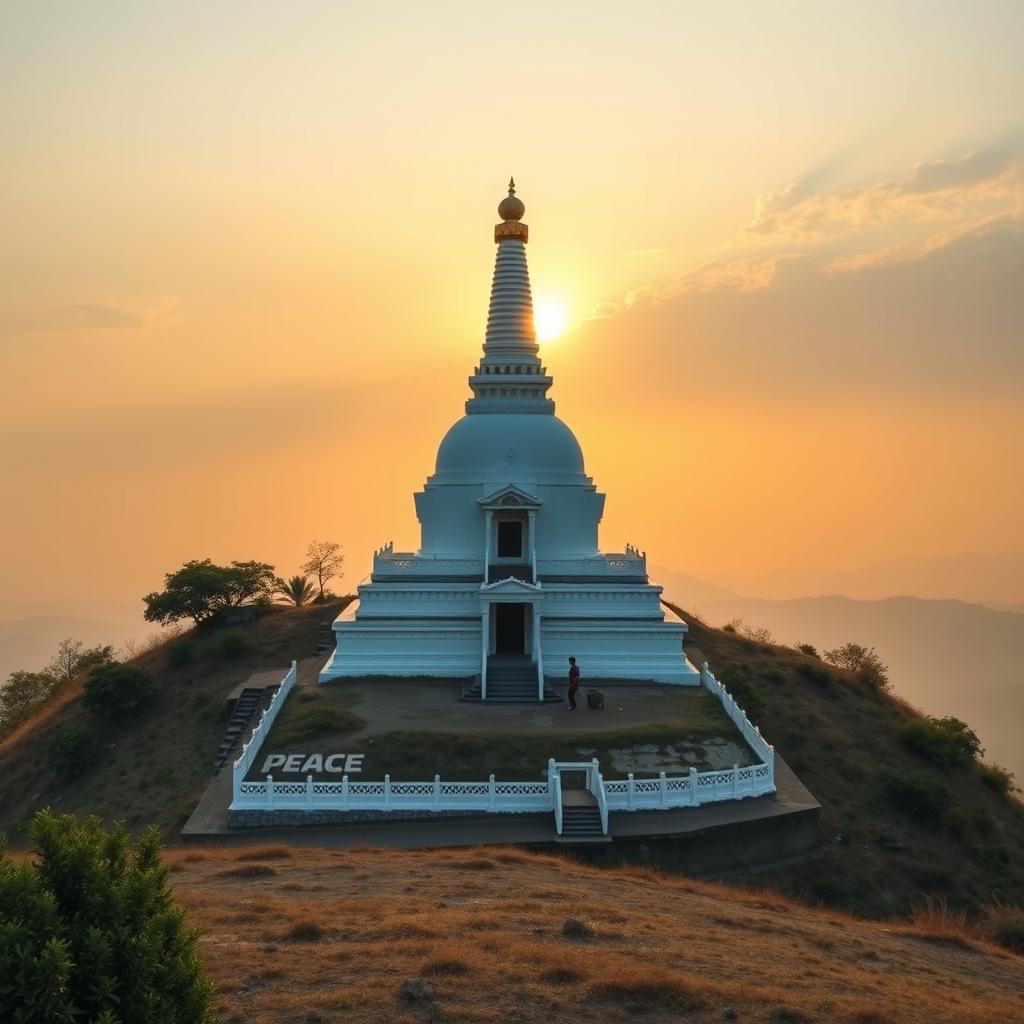
The Dhauli edicts comprise a set of the Major Rock Edicts, specifically Edicts I through X and Edicts XIV, which collectively articulate the core principles of Ashoka’s Dhamma. What distinguishes the Dhauli versions from other copies of the same edicts is their tone of particular urgency and personal remorse. In Rock Edict XIII, which famously describes the Kalinga War and its aftermath, Ashoka expresses his profound grief and regret. He writes that the slaughter and deportation of people in Kalinga weigh heavily upon his mind, and he declares that even the killing of a hundredth or a thousandth part of those who died in Kalinga would now be a matter of serious concern to him. This edict is remarkable for its raw emotional honesty, a quality rarely found in royal inscriptions of any period or civilization.
The Dhauli edicts also contain special instructions that appear to have been specifically tailored for the people of Kalinga. Ashoka addresses the local administrative officers, urging them to discharge their duties with fairness and compassion. He emphasizes the importance of respecting Brahmanas and Shramanas, of showing consideration to slaves and servants, and of practicing tolerance toward all religious sects. The inclusion of these specific admonitions suggests that Ashoka was acutely aware of the need to heal the wounds of Kalinga and to integrate its proud people into the Mauryan imperial framework through persuasion rather than coercion. The edicts at Dhauli thus serve a dual purpose: they are both a personal confession of guilt and a blueprint for a new kind of governance based on ethical principles rather than brute force.
The Diamond Triangle of Buddhism: Ratnagiri, Udayagiri, and Lalitgiri
The Buddhist heritage of Odisha finds its most magnificent expression in what scholars and heritage enthusiasts have come to call the Diamond Triangle, a constellation of three ancient Buddhist sites located in the Jajpur district of Odisha. Ratnagiri, Udayagiri, and Lalitgiri, situated within a radius of approximately thirty kilometers from one another, together represent one of the most important and visually spectacular Buddhist complexes in all of Asia. These sites flourished primarily between the fifth and twelfth centuries of the Common Era, though their origins can be traced back to the early centuries of the Buddhist presence in Odisha following Ashoka’s missionary activities. The Diamond Triangle derives its name not only from the geometric arrangement of the three sites but also from the Buddhist metaphor of the diamond or vajra, symbolizing indestructibility and the highest form of wisdom.
Ratnagiri: The Crown Jewel of Odishan Buddhism
Ratnagiri, literally meaning the Hill of Jewels, is widely regarded as the most impressive and significant site within the Diamond Triangle. Excavations conducted by the Archaeological Survey of India between 1957 and 1961 revealed a sprawling monastic complex that ranks among the finest examples of Buddhist architecture in India. The site contains two massive monasteries, a large stupa, numerous smaller stupas, and an exquisite collection of stone sculptures that testify to the extraordinary artistic sophistication of the Buddhist community that thrived here. The main monastery, identified as Monastery 1, is a quadrangular structure built around a central courtyard with a beautifully carved shrine in the middle. Its walls are adorned with niches containing images of the Buddha, Bodhisattvas, and various Buddhist deities, reflecting the Vajrayana tradition that dominated Buddhism in Odisha during the later period.
Ratnagiri was a major center of Buddhist learning, often compared in importance to Nalanda and Vikramashila. Inscriptions found at the site indicate that it received royal patronage from the Bhaumakara and Somavamsi dynasties of Odisha, as well as from foreign rulers. The discovery of a massive number of seals and sealings at Ratnagiri suggests that it was an important administrative and academic center, perhaps functioning as a university in its own right. The sculptural art of Ratnagiri is particularly noteworthy for its sensuous elegance and spiritual intensity. Images of Avalokiteshvara, Manjushri, and Tara found here are considered masterpieces of Pala-period art, displaying a distinctive regional style that blends the refined aesthetic sensibilities of Odisha with the broader Buddhist iconographic traditions of eastern India.
Udayagiri: The Monastic Metropolis
Udayagiri, meaning the Hill of the Rising Sun, is the largest of the three Diamond Triangle sites in terms of physical extent. Spread across two adjacent hills known as Udayagiri I and Udayagiri II, the site contains the remains of a massive monastic complex that includes two large monasteries, a stupendous stupa, and a remarkable collection of sculptural panels and votive stupas. The monastery at Udayagiri I, known as the Madhavapura Mahavihara based on an inscription discovered at the site, is a sprawling structure that could have housed hundreds of monks. Its architectural layout follows the typical pattern of Buddhist monasteries in eastern India, with cells arranged around a central courtyard, but its scale and the quality of its construction indicate that it was an institution of considerable wealth and importance.
The excavations at Udayagiri have revealed a rich trove of artistic treasures that shed light on the religious and cultural life of the Buddhist community in ancient Odisha. A massive image of the Buddha in bhumisparsha mudra, the earth-touching posture, was discovered at the site and is now housed in a site museum. This image, carved from a single block of chlorite stone, is remarkable for its serene expression and the meticulous detailing of its robes and features. Equally impressive are the numerous images of Bodhisattvas and female deities found at Udayagiri, which reflect the strong Tantric or Vajrayana influence that characterized Buddhism in Odisha from the eighth century onward. The site also contains a series of rock-cut chambers and meditation cells that suggest it was a center for contemplative practice as well as academic study.
Lalitgiri: The Ancient Cradle of Buddhist Monasticism
Lalitgiri, meaning the Red Hill, is believed to be the oldest of the three Diamond Triangle sites, with archaeological evidence suggesting continuous occupation from the first century BCE onward. The site is located atop a low hill and comprises the remains of a massive stupa, two monasteries, and a large number of votive stupas arranged on terraced levels along the hillside. The great stupa at Lalitgiri is particularly significant, as it represents one of the earliest examples of Buddhist stupa architecture in eastern India. Excavations at the stupa revealed that it had been enlarged and renovated multiple times over the centuries, indicating the sustained importance of the site as a place of pilgrimage and veneration.
One of the most sensational discoveries at Lalitgiri was the unearthing of a relic casket containing sacred bone fragments within the core of the great stupa. This discovery, made in the late 1980s, lent immense archaeological significance to the site, as relic stupas are among the most sacred structures in the Buddhist tradition. The casket, made of khondalite stone, was found enclosed within multiple layers of protective containers, suggesting that the relics it held were regarded with the highest reverence. Although the identity of the individual whose relics were enshrined remains uncertain, some scholars have speculated that they may be associated with the direct disciples of the Buddha, which would place Lalitgiri among the most ancient and sacred Buddhist sites in the world. The site museum at Lalitgiri houses an impressive collection of sculptures, including images of the Buddha in various mudras, Bodhisattva figures, and a remarkable series of narrative panels depicting scenes from the Jataka tales.
The Buddhist Heritage Circuit: Reclaiming a Lost Legacy
In recent years, the government of Odisha has undertaken a systematic and ambitious initiative to develop a Buddhist Heritage Circuit that connects the Diamond Triangle sites with other significant Buddhist locations across the state, including Dhauli, Langudi, Tarapur, and Banpur. This circuit is designed to position Odisha as a premier destination for Buddhist pilgrimage and heritage tourism, drawing visitors from across the Buddhist world, particularly from countries like Japan, South Korea, China, Thailand, Sri Lanka, and Myanmar, where Buddhism remains a living tradition. The development of the circuit involves the construction of modern infrastructure, including roads, visitor centers, interpretation facilities, and accommodation options, while ensuring that the archaeological integrity of the sites is rigorously protected.
The Buddhist Heritage Circuit of Odisha represents more than a tourism project; it is an act of historical reclamation. For centuries, the Buddhist legacy of Odisha was overshadowed by the later predominance of Hinduism and the fame of Odisha’s magnificent temples. The archaeological excavations at the Diamond Triangle sites, which began in earnest only in the mid-twentieth century, revealed a hidden chapter of Odisha’s history that was far more glorious and internationally connected than had previously been imagined. The heritage circuit seeks to integrate this rediscovered chapter into the broader narrative of Odisha’s cultural identity, presenting the state not merely as the land of Jagannath and the Lingaraja temple, but as one of the great cradles of Buddhist civilization, a land where the teachings of the Buddha took root in the immediate aftermath of the Kalinga War and flourished for over a millennium.
The significance of this circuit extends beyond the boundaries of Odisha. By restoring and highlighting its Buddhist heritage, Odisha is reclaiming its place in the global history of Buddhism, a history that begins with Ashoka’s anguished realization on the banks of the Daya River and extends through the glorious centuries of the Diamond Triangle monasteries, where monks from across Asia gathered to study, meditate, and carry the light of Buddhist wisdom to distant lands. The Buddhist Heritage Circuit is thus a bridge between past and present, between Odisha and the wider world, and between the ancient ideal of peace that Ashoka embraced after Kalinga and the contemporary aspiration for a more compassionate and harmonious world.